10 Most Romantic Things to Do in Europe for Couples

Thermal hot springs in Tuscany, Italy

Thermal hot springs in Tuscany, Italy

The most romantic things to do in Europe for couples do not add up to a list of famous stops. The activities on this list have been chosen because they link geographically and logistically into a single trip. A coastal drive in Portugal flows into hot-spring soaks in Spain, a private Bavarian castle visit connects naturally to a Rhine river cruise and a search for the Northern Lights pairs with a night in a Reykjavík thermal pool. Sequenced correctly, three or four of these experiences fit into one two-week itinerary without adding an extra flight.

That sequencing is where most couples lose time. Booking Neuschwanstein Castle without an advance reservation, for example, can mean a three- to four-hour wait at the ticket office in peak season; the difference between an afternoon well spent and an afternoon spent standing in a parking lot. The same is true of coastal restaurant tables, gondola slots, and aurora-viewing transfers: booked cold, they're a gamble; booked ahead by someone who knows the calendar, and they're a formality.

Extraordinary travel begins with a human touch and our destination specialists design every journey with meticulous care and attention to detail. That's the function of a Zicasso travel expert. They do the work a couple would have to absorb, including timed entries, private drivers, restaurant tables, and routing between countries, building into one sequence and handling everything quietly in the background. Because every itinerary is designed around how a specific couple wants to spend their time rather than pulled from a fixed template, the same list of experiences below can become a slow, food-and-wine-led two weeks for one and a faster, castle-and-coastline circuit for another. The destinations don't change, but the shape of the trip does.

1. Soak in Europe’s Geothermal Hot Springs

Couple soaking in geothermal hot springs of the Blue Lagoon in Iceland
Blue Lagoon in Iceland. Photo courtesy of The Retreat at the Blue Lagoon

A hot spring works on a couple in a way almost no landmark does: it forces you to stop walking, stop photographing, and just be still together during one of the few travel experiences with nothing to see next.

Across Europe's volcanic regions, this stillness has different textures. Iceland's Blue Lagoon surrounds you in milky, mineral-rich water against black lava, while a smaller thermal lake in Hungary offers the same slowing effect without a single crowd. Choosing between them is really about deciding whether you want dramatic and geological or pastoral quiet.

  • Blue Lagoon soak: Iceland's best-known thermal spa surrounds you in milky-blue, mineral-rich water against dark lava fields and drifting steam. Book a private evening slot to trade the daytime crowds for a near-empty lagoon under the midnight sun or aurora-season skies.
  • Hévíz Lake float: Wade into Hungary's thermal lake, one of the largest natural warm-water lakes in the world, where lily pads and gentle ripples replace the volcanic drama of Iceland with a slower, more bucolic kind of intimacy.
  • Laugarvatn Fontana pools: Alternate between hot pools and cool lakeside air on Iceland's shores, a contrast a Zicasso specialist can time around the geothermal bakery's fresh rye bread, pulled straight from the sand.
  • Pantelleria hideaway: On this volcanic island between Sicily and Tunisia, secluded hot pools meet sea breeze at the water's edge. It is a far less-discovered alternative for couples who want the geothermal experience without the visitor numbers of Iceland.
  • Hammam Al Ándalus bath: Linger in candlelit Moorish-style baths in Spain, where marble and arched ceilings turn a spa visit into something closer to a private ritual, especially when booked as a couples-only session rather than a shared time slot.

To pair thermal escapes with culture and cuisine, browse our curated tours of Spain.

2. Take in a Famous Greek Sunset

Oia White City, Santorini Island, Greece

The reason a Greek sunset feels different from a sunset anywhere else comes down to timing and geometry: whitewashed architecture reflects the changing light rather than absorbing it, so the color show plays out twice, once in the sky, once across the buildings themselves.

That double effect is easy to miss if you arrive at the wrong vantage point or at the wrong minute, which is why the best Santorini and Mykonos viewpoints fill up 30 minutes before sunset with people who read the same guidebook. A private terrace booking or a quieter cliffside path, timed to the minute rather than the hour, is the difference between watching the sunset and watching the back of someone else's phone.

  • Oia caldera view: Watch the sun set over Santorini's caldera as the town's white domes shift from bright to gold and the water below turns to glass.
  • Little Venice waterfront: Stand where Mykonos's waterfront houses meet the sea, close enough that waves brush the walls beneath your feet as the horizon glows behind passing boats.
  • Sounio temple ruins: Take in the sunset from the Temple of Poseidon at Cape Sounion, its 2,400-year-old columns framing open sea in a view that predates the crowds by two and a half millennia.
  • Keri Lighthouse cliffs: Look out from Zakynthos's sea caves and cliffs, where the coastline does the work a viewing platform would elsewhere. There is no ticket and no railing, just rock and horizon.
  • Nea Paralia stroll: Walk Thessaloniki's waterfront as harbor lights come on one by one, a city sunset built around motion rather than stillness. It is better suited to couples who'd rather wander than sit and wait.

Explore island sunsets and city evenings with our Santorini and Mykonos tours.

3. Tour Fairytale Castles Without the Crowds

Neuschwanstein Castle in Schwangau, Germany

A castle visit is romantic or a logistics exercise. The difference usually comes down to a single decision made weeks in advance. Neuschwanstein Castle, the most-visited building of its kind in Germany, now requires a timed ticket booked ahead of arrival. Without one, couples can face a three- to four-hour wait at the ticket office during summer, when as many as 6,000 people pass through in a single day.

That's not a reason to skip it. It's a reason to let someone else hold the ticket. The castles below each carry a different kind of drama, and a private guide or early entry slot changes the visit itself, not just the wait time. The first 90 minutes after opening at Neuschwanstein, for instance, run nearly empty before tour buses arrive.

  • Pena Palace grounds: Wander Portugal's hilltop palace, its clashing red and yellow towers visible from the Atlantic on a clear day. Arrive at first entry to see it before the fog burns off and the crowds arrive by tram.
  • Neuschwanstein terraces: Approach Bavaria's 19th-century fairy-tale castle with a pre-booked morning slot that trades a four-hour wait for near-solitude on the Marienbrücke Bridge.
  • Irish coastal stronghold: Visit a lesser-known Irish castle where battlements overlook open water and countryside, a deliberate counterpoint for couples who've already done the famous names and want a private version of the same feeling.
  • Chambord staircases: Explore France's Château de Chambord, where a double-helix staircase, long attributed to a design associated with Leonardo da Vinci, lets two people climb at once without ever meeting on the stairs. This is a small architectural detail with an outsized romantic reading.
  • Windsor state rooms: Step into England's Windsor Castle, still an official residence of the British monarchy and the largest inhabited castle in the world, where a private out-of-hours tour reaches rooms the day-ticket crowd never sees.

For more storybook inspiration, see 10 Fairytale Castles to Visit on Vacation and our Best Castles to Visit in the United Kingdom.

4. Drive Europe's Coastlines and Choose the Right Beach for Two

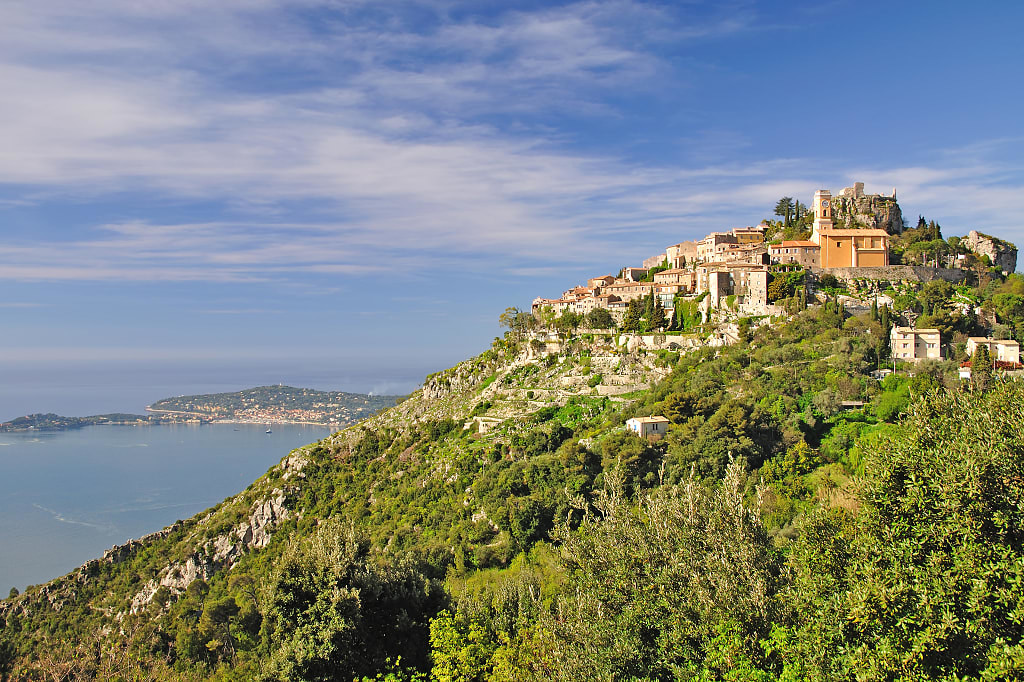
Eze village, Cote d'Azur, French Riviera

Not every Mediterranean beach suits every couple, and the ones that show up on best-of lists most often aren't necessarily the right match. A private driver along a coastline solves the transport problem; picking the right stretch of sand solves the actual one.

If you want calm, shallow water for slow mornings rather than swimming, the coves along Portugal's Algarve are built for that pace. If you want a dramatic backdrop more than swimmable water, the cliffside pull-offs on the Amalfi Coast deliver the view first and the beach second. If you want a lively, see-and-be-seen stretch with restaurants steps from the sand, the French Riviera's beach clubs are the better fit. And if quiet matters more than convenience, the less-trafficked coves along Croatia's Adriatic Highway trade a bit of accessibility for a beach you won't share with a tour bus.

  • Adriatic coastal drive: Follow Croatia's Adriatic Highway with the sea running beside the road the entire way, stopping at small ports for a seafood lunch chosen by a private guide who knows which coves stay quiet, even in July.
  • Algarve cove hopping: Travel Portugal's Algarve, where whitewashed towns sit above turquoise coves. A private driver who knows the tide tables can time your stops so you reach each beach at its calmest, least-crowded hour.
  • Amalfi cliff route: Navigate Italy's Amalfi Coast by private car, pausing at pre-booked cliffside tables where a lunch reservation matters more than the drive itself, since the best restaurants tend to turn away walk-ins by midday, depending on the time of year.
  • French Riviera stretch: Cruise past Riviera beach clubs and rocky points, letting a private guide time your arrival so you land in town just as evening light softens rather than at midday's harshest hour.
  • Ring of Kerry loop: Circle Ireland's Ring of Kerry for an entirely different coastal register. You will experience Atlantic cliffs and stone walls instead of Mediterranean warmth, so it is better suited to couples who want scenery over sand.

For a closer comparison of specific stretches of coastline, explore our guide to the Best Beaches in the Mediterranean.

5. Sample the Regional Flavors on Classic Food Tours

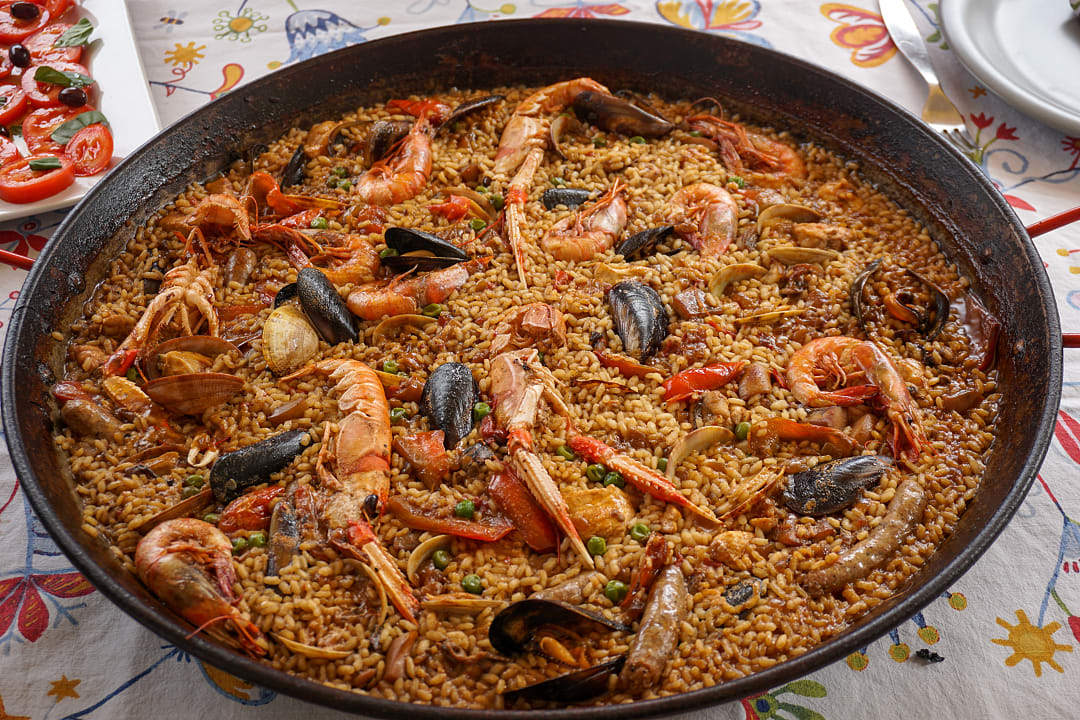
Spanish Paella
Spanish Paella

A food tour replaces a decision couples usually get wrong on their own: which restaurant, out of hundreds, is actually worth the one dinner they have in a given city. A curated route through a region's most representative kitchens removes that guesswork entirely and does it with reservations and translation already handled.

The reward is specific. You leave understanding a place through what it grows and cooks, not just what it looks like.

  • Catalan countryside table: Sit at a farmhouse table for slow-braised lamb, escalivada, and rustic bread rubbed with olive oil, a meal built around what's harvested that week rather than a fixed tourist menu.
  • Picpoul coastal tasting: Pair chilled Picpoul from southern France with oysters and mussels straight from nearby beds, a wine chosen specifically because it was made to go with this exact seafood.
  • Copenhagen Nordic plates: Discover modern Nordic cooking, where cured salmon, foraged herbs, and reindeer or langoustine reflect a cold-climate pantry rather than a generic European tasting menu.
  • Chocolate house tour: Step into cocoa-scented boutiques in France and Belgium, watching pralines and ganache made by hand. Time your tour for the afternoon batch, before the display cases are picked over.
  • Long-table regional dinner: Settle into a single extended meal where each course reveals another ingredient specific to that region, arranged so you're never rushed between courses by a set seating time.

To plan effortless and indulgent food-forward days, explore our Europe food and wine tours and vacations and our guide to the Best Food and Wine Destinations in Europe.

6. Cruise Europe’s Rivers and Canals

Canals in Amsterdam, the Netherlands

A river route solves a specific problem that driving and walking don't: it lets two people sit still while the destination moves past them, which is a genuinely different way to see a place than arriving, parking, and walking to a landmark.

Germany's Middle Rhine Valley makes the case most clearly. In a 40-mile UNESCO-protected stretch of river, more than 40 castles and fortresses appear one after another on the hillsides, a density of scenery that would take days to cover by road, but unfolds in an afternoon by boat.

  • Venice gondola glide: Move through Venice's narrow canals by private gondola, where palaces and churches rise directly from the waterline and the only sound is the oar dipping in and out.
  • Seine sunset cruise: Drift along Paris's Seine as bridges arch overhead and the city's lights come on one by one. Time your visit for the 20 minutes when the Eiffel Tower's evening sparkle begins.
  • Amsterdam canal circuit: Circle the Dutch capital by boat past gabled, centuries-old houses leaning gently toward the water, a slower-paced counterpoint to the city's bicycle-heavy streets.
  • Bruges canal loop: Trace medieval Bruges's canal ring by boat, passing swan-dotted water and stepped gable rooftops in a city built, unusually, almost entirely around its waterways.
  • Rhine castle cruise: Sail the Middle Rhine past terraced vineyards and the more than 40 hilltop castles packed into this single UNESCO-listed valley, pausing in half-timbered villages that a road trip would drive straight past.

For ideas on weaving river and canal journeys into a broader itinerary, explore our handcrafted Germany tours and vacations.

7. Seek Out Europe's Extraordinary Moments

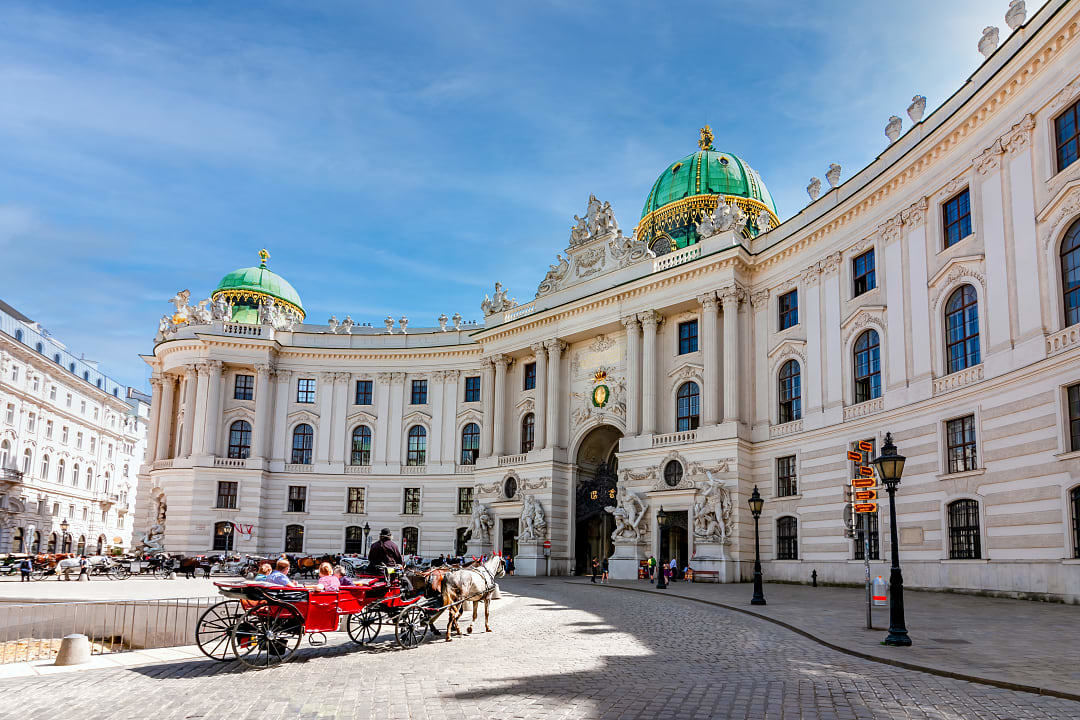
Carriage ride at the Hofburg Palace in Vienna, Austria
Vienna, Austria

The most memorable parts of a couple's trip are rarely the headline sights. Rather, they're the carriage ride, the empty cove, or the tapas bar with no name outside. These moments don't fit a category because they're not really attractions; they're logistics done well enough to disappear.

A carriage timed for dusk, a boat skipper who knows which coves clear out by 4pm, and a guide who can get a table at a tapas bar with just eight seats do not show up on a map. This is why it needs to be arranged by someone who knows the place.

  • Vienna dusk carriage: Ride through Vienna by horse-drawn carriage as evening settles over the boulevards, a fading tradition worth timing deliberately rather than treating as a tourist photo op.
  • Private island-hopping: Sail between the Greek Islands on a chartered boat, with a skipper who steers toward bays that clear out by mid-afternoon rather than the harbors every ferry stops at.
  • Small-bar tapas crawl: Move through Spanish tapas bars where locals, not tourists, fill the counters and access depends on a guide who already has a standing table.
  • Portuguese village walk: Walk old fishing villages in Portugal at a pace set by the light, reaching viewpoints over the harbor exactly when the afternoon glare has softened.
  • Empty-cove picnic: Arrange a private picnic on a stretch of coastline with no public access point.

For active couples who enjoy exploring at a gentler pace, see Zicasso’s Best Cycling Destinations in Europe and our guide, Hidden Gems in Greece.

8. Taste Wines Where They're Made

Douro Valley Vineyards, Portugal
Douro Valley, Portugal

Wine tastes different at the source due to its chemistry. Soil, slope, and climate shape a wine's character in ways a bottle bought at home can't convey, which is why a Chianti tasted on the hillside where it was grown reads differently than the same bottle poured at a dinner party three thousand miles away.

A private driver removes the one real obstacle to tasting properly: the need for someone to stay sober enough to get you to the next vineyard.

  • Tuscan hillside tasting: Swirl a deep Chianti while looking out over the exact limestone and clay slopes that shaped its tannins, a direct link between soil and glass you won't get anywhere else.
  • Alentejo estate visit: Taste Alentejo reds built for warm evenings; full-bodied, dark-fruited wines from a region defined as much by its cork oak groves as its vineyards.
  • Catalan cava cellar: Sip sparkling Cava alongside Catalan reds, tasting how a single coastline can produce completely different wines depending on whether the vines face the sea or inland.
  • Bordeaux château tour: Raise a glass in one of Bordeaux's grand tasting rooms, where centuries of barrel-aging technique are as much the subject as the wine.
  • Mosel slope tasting: Taste a Mosel riesling grown on some of the steepest vineyard slopes in the world, hand-harvested because no machine can manage the incline.

To design days that pair vineyards, villages, and fine dining, explore our Italy food and wine tours or Zicasso’s Best Food and Wine Destinations in Europe.

9. Explore National Parks at an Easy Pace

Bastei Bridge, Saxon Switzerland National Park, Germany
Bastei Bridge at Saxon Switzerland National Park, Germany

A national park gives you wide-open space without requiring the kind of strenuous hiking that turns a romantic day into an athletic one. The parks below offer that scale of landscape on gentle, well-marked trails rather than technical routes.

The difference between a good and a forgettable park visit is almost always timing, so arrive for the light at either end of the day rather than the flat, shadowless hour in between.

  • Écrins glacier trail: Walk an easy path in France's Écrins National Park that ends at a secluded meadow, with glaciers and ridges forming the skyline the entire way.
  • Gran Paradiso wildlife walk: Explore Italy's Gran Paradiso National Park for a real chance at spotting alpine ibex and chamois against open meadows, followed by a stay at a village inn just outside the park boundary.
  • Ordesa canyon path: Walk beneath the rock walls of Spain's Ordesa y Monte Perdido National Park, where waterfalls follow the trail closely enough that you're rarely out of earshot of moving water.
  • Peneda-Gerês villages: Discover Portugal's only national park, where stone villages and terraced hillsides sit inside the protected landscape rather than beside it.
  • Saxon Switzerland cliffs: Traverse Germany's sandstone towers and ravines, with viewpoints positioned specifically for sunrise or sunset over the Elbe River below.

For more ideas on soft-adventure escapes, see our Breathtaking National Parks in Italy.

10. Search for the Spellbinding Northern Lights Without the Guesswork

Couple watching the northern lights in Iceland
Northern lights in Iceland

Seeing the aurora is a matter of timing and darkness, not luck alone. This is exactly why couples who plan their base and nightly outings around forecasted conditions see it far more often than those who simply hope for the best from a single fixed location.

The nights the aurora doesn't appear still tend to become part of the memory: cold air, real silence, and the shared anticipation of watching the sky for something that might or might not arrive.

  • Reykjavík aurora nights: Base yourselves near Reykjavík, then head beyond the last streetlights on clear nights, where low mountains and lava fields turn to shadow beneath the sky.
  • Isle of Skye viewing: Watch from Scotland's dark, cliff-lined headlands, where the aurora's reflection trembles on the water below jagged sea cliffs.
  • Finnish Lapland forest: Venture into snow-laden pine forest in Finnish Lapland, one of the more reliably dark-sky regions in Europe for aurora visibility.
  • Norwegian fjord cruise: Watch the aurora rise over Norway's northern fjords from a small private boat, where sheer rock walls mirror the color directly in the water.
  • Abisko dark-sky park: Visit Swedish Lapland's Abisko National Park, known for unusually clear, stable skies caused by a local rain-shadow effect that keeps cloud cover lower than surrounding regions.

To begin planning a Northern Lights journey shaped around comfort, timing, and romance, explore our Iceland tours and vacations.

Experience the Most Romantic Things to Do in Europe for Couples

Couple watching the sunset in Santorini, Greece
Santorini, Greece

None of the experiences above need to be visited in isolation. A coastal drive through Portugal and Spain connects naturally to a hot-spring stop and a food tour in the same region, a Bavarian castle visit sits a short train ride from the Rhine's castle-lined valley, and an aurora search in Iceland can open or close a trip that also includes a soak in the Blue Lagoon. The routing is what turns a list of romantic ideas into an itinerary. It's also the part most couples find hardest to plan themselves.

That's the role a Zicasso travel specialist plays: not suggesting destinations, but sequencing them by matching entry times, drivers, and reservations across countries into a single route built around how a specific couple wants to spend their days, then handling the coordination quietly so the trip stays unhurried. Explore our Europe travel guide for further information.

32,000+ Verified Traveler Reviews