Cooking classes teach the story before the technique, but the story looks different everywhere you go. In Tuscany, it's a landscape that dictates a short list of ingredients and lets them speak for themselves. In Marrakech, it's a spice trade that turned layering flavor into an art form. In Vietnam, it's a market culture built entirely around freshness and balance. In the Basque Country and India, that same instinct takes on forms you may not immediately associate with a "cooking class" at all: a centuries-old, members-only cooking society in the Basque Country and a spice trade in southern India old enough to have drawn traders across oceans 2,000 years before tourism existed.
What connects all five is not a menu, but access created by a travel specialist to the market stall, the family kitchen, the cooking society, or the spice farm where a dish's history is still being lived out, not just recited.
TUSCANY
Tuscany's culinary pleasures often begin with restraint: a few ingredients, carefully chosen, allowed to speak clearly. The golden fruitiness of new olive oil, the sharp salt of pecorino, the earthy perfume of porcini, and the slow richness of a tomato sauce are not separate notes. They belong to the landscape of vines, cypress trees, stone farmhouses, and small markets where the day's ingredients still shape the meal.
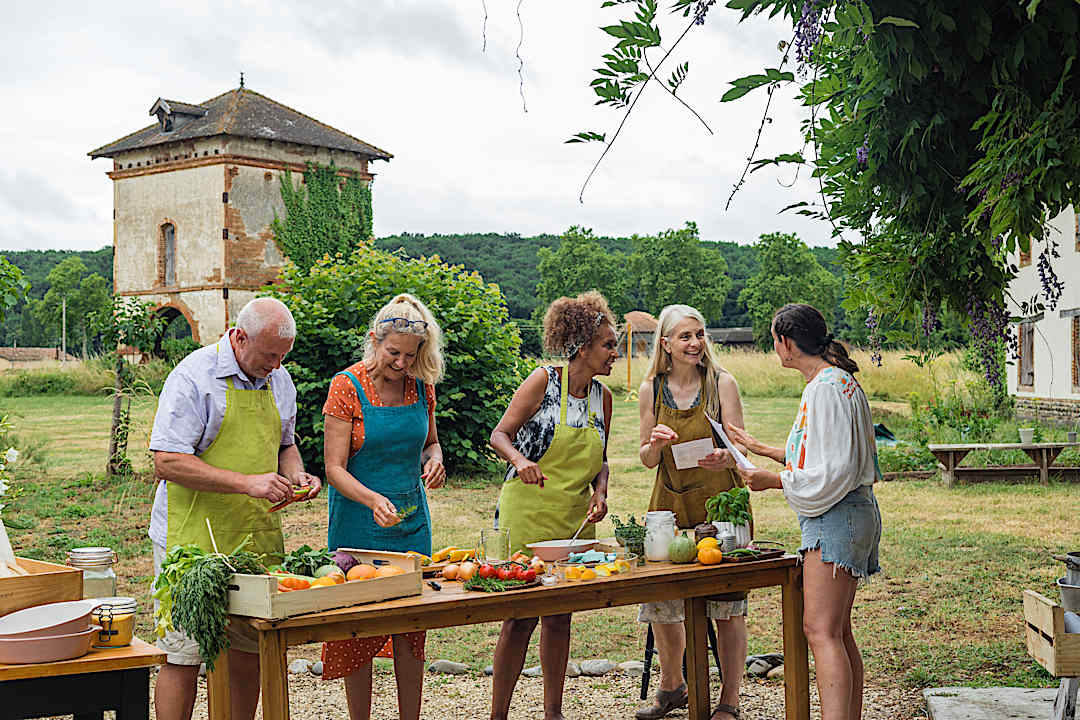
Zicasso specialists favor cooking experiences that take you beyond a polished demonstration room and into the living traditions of Florence and the Tuscan countryside. You may browse stalls in Florence's Central Market before heading to a chef's home or spend a morning at a working farmhouse where flour dusts the table and the kitchen window opens toward olive groves and vineyards.
What to Expect
- Market morning: Follow your host through Florence's Central Market, where glossy purple eggplants, tender greens, wheels of pecorino, and sun-warm tomatoes invite a menu shaped by the season.
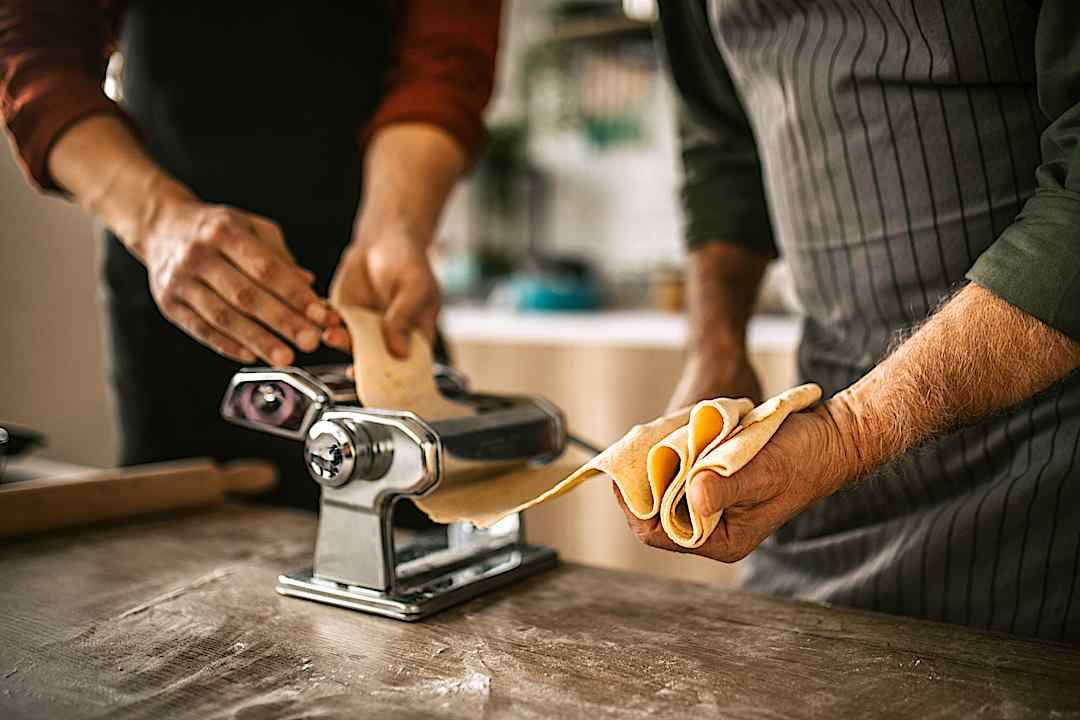
- Pasta by hand: Mix and roll tagliatelle or pici until the dough becomes supple beneath your hands, then taste how its uneven edges catch a sauce of slow-cooked tomato, wild boar ragù, or fresh herbs.
- Farmhouse tempo: Cook in a countryside kitchen where the day may begin with eggs from the farm, vegetables from the garden, and olive oil with a grassy, peppery finish.
- Cheese and wine: Explore the flavors of Tuscan pecorino or pair the dishes you prepare with wines from nearby Chianti Classico producers, where dark cherry, dried herbs, and savory earth echo the food on the table.
- Long-table lunch: Settle in over the meal you created, perhaps with crusty bread, a bowl of pasta, a seasonal dessert, and the easy conversation that turns lunch into an occasion.
Where You May Cook
- Florence's markets: Shop for ingredients alongside a local chef before a private cooking class, learning how color, aroma, ripeness, and season guide a Tuscan menu.
- A Chianti farmhouse: Make handmade pasta or discover traditional cheese-making on a working property near Pienza or Radda, where vineyard and farm flavors meet.
- Arezzo kitchens: Explore a quieter corner of Tuscany through artisan chocolate, local recipes, and the region's quietly confident food culture.
- A Florentine home: Master pasta-making in a chef's kitchen, then enjoy the satisfying reward of a meal made entirely from scratch.
- Vineyard estates: Pair a cooking class with tastings at working Chianti Classico producers, lingering over the relationship between the cellar, kitchen, and surrounding hills.
Build a Culture of Tuscan Wine and Cuisine Tour designed around the tastes, producers, and pace you enjoy most.
MARRAKECH
In Marrakech, cooking begins with fragrance. The medina's spice stalls offer a warm swirl of cumin, turmeric, dried rose, smoky paprika, and ras el hanout, while baskets of preserved lemon bring a saline-bright burst of citrus to the air. Beyond the souk's bustle, the city's deepest culinary knowledge unfolds more quietly in riad courtyards, family kitchens, and homes where recipes are taught by watching closely, then trying again under a patient correction.
A private Moroccan cooking experience lets you move from the sensory intensity of the market to the calm of the kitchen. You can learn how spices are layered rather than simply added, how a tagine builds flavor under its conical lid, and why bread, tea, and hospitality are as essential to the meal as the dish itself.
What to Expect
- Spice-stall ritual: Walk the medina with your host and learn to recognize saffron, ras el hanout, cumin, and preserved lemon by their color, texture, and perfume before they reach the pot.
- Khobz from scratch: Mix and shape Morocco's daily bread by hand, then savor its warm, tender crumb alongside salads, olives, and sauces meant to be gathered with every bite.
- Tagine technique: Layer meat or vegetables with spice, fruit, herbs, and slow heat in a clay vessel, waiting as the kitchen fills with the sweet-savory scent of cinnamon, ginger, and caramelizing onion.
- Courtyard kitchen: Cook in the shade and stillness of a riad courtyard or family home, away from the hurry of a restaurant service and close to the rituals of a Moroccan meal.
- Mint-tea finish: End with a glass of tea poured from height, its bright sweetness and fresh spearmint scent marking the lingering close of the experience.
Where You May Cook
- A Marrakech riad: Take a private class in a traditional courtyard home, where cooking is as much about welcome and conversation as it is about technique.
- The medina souks: Choose ingredients with an instructor before cooking, turning spice, produce and bread stalls into the first chapter of the meal.
- A Fes family kitchen: Discover Fassi culinary traditions, known for their refined balance of sweet, savory, floral, and spice-driven flavors.
- Aït Ben Haddou: Combine cooking with time in the dramatic landscape around this historic fortified village, where the meal reflects the pace and produce of southern Morocco.
- Atlas foothills: Join a Berber family for a cooking experience that brings mountain hospitality, local ingredients, and village life to the table.
For more inspiration, see our customizable Moroccan Food Tour: An Epicurean Delight.
VIETNAM
Vietnamese cooking is built on contrast: the clean snap of fresh herbs against the depth of fish sauce, the gentle sweetness of grilled pork against sharp lime, the soft tangle of rice noodles brightened by chile and pickles. A cooking class becomes most revealing when it begins where the meal begins, at a market before the heat of the day, among baskets of basil, coriander, mint, morning glory, ripe tropical fruit, and just-caught seafood.
Zicasso specialists can arrange cooking experiences that move beyond a hotel demonstration setting and into the regional food cultures of Hanoi, Hoi An, Hue, the Mekong Delta, and Ho Chi Minh City. You may shop with a cook who knows precisely which herbs give a dipping sauce lift, then prepare the dishes in a private home or intimate kitchen where the recipes still belong to everyday family life.
What to Expect
- Dawn-market energy: Follow your instructor through a local wet market as vendors arrange herbs, fish, noodles, and produce, learning how freshness, aroma, and texture guide each purchase.
- Regional flavor: Taste why Hanoi's bún chả, charcoal-grilled pork served with noodles and herbs, differs from Hoi An's cao lầu, whose chewy noodles, fragrant greens, and pork broth capture central Vietnam's distinct character.
- Hands-on balance: Roll spring rolls, grill meat, prepare noodles, and adjust a dipping sauce until salty fish sauce, sugar, lime, garlic, and chile land in a vibrant balance.
- Home-kitchen warmth: Cook in a family home away from the city's busiest streets, where the clatter of bowls, scent of simmering broth, and shared work of preparation make the meal feel personal.
- Table-time reward: Eat what you have made at the same table where your host's family gathers, letting the textures and flavors of the meal become part of the day's conversation.
Where You May Cook
- A Hanoi family home: Join a private class in the countryside outside the city, where regional cooking traditions unfold at a gentler pace.
- Hoi An markets: Shop the riverside market before cooking in or near the Ancient Town, surrounded by central Vietnam's vivid herb, noodle, and seafood culture.
- Hue kitchens: Learn dishes inspired by Vietnam's former imperial capital, where presentation, balance, and layered flavor bring a sense of ceremony to the table.
- A Mekong Delta homestead: Pair a cooking class with a boat journey through floating markets and waterways, tasting the tropical abundance of southern Vietnam.
- Ho Chi Minh City neighborhoods: Explore southern dishes that lean brighter, sweeter, and more exuberant in their use of herbs, coconut, and fresh produce.
Take a look at our Vietnam food tours and vacations for more details and inspiration for your trip.
BASQUE COUNTRY
San Sebastián eats standing up. Along the zinc bars of the Old Town, pintxos, the Basque answer to tapas, are laid out like a buffet meant to be read before it's ordered: a skewer of anchovy and olive, a slice of tortilla, a crouton crowned with seared foie gras. It is a style of eating built for conversation and movement, one bar and one bite at a time, and it has helped a region of under two million people accumulate one of the highest concentrations of Michelin stars per capita anywhere in the world.
But pintxos are only the most visible layer of Basque food culture. Inland and along the coast, the region's deeper culinary life plays out in institutions most visitors never hear about: txokos, private gastronomic societies where members have gathered for generations to cook and eat as a group, and sagardotegiak, rustic cider houses where autumn's new cider is drunk straight from the barrel alongside a set menu that hasn't changed much in a century. A Zicasso specialist can open doors to both, turning a food-focused trip into a study of how fiercely the Basque Country has protected its own way of eating.
What to Expect
- Pintxos crawl: Move bar to bar through San Sebastián's Old Town with a local guide who teaches you to read a pintxos counter and order like a regular, rather than sitting down to a single formal meal.
- Txoko tradition: Learn about Basque gastronomic societies, member-run clubs where friends have cooked and eaten together for generations, and where access can be arranged through specialist relationships built over years.
- Cider house ritual: Take part in the txotx tradition at a sagardotegia outside San Sebastián, catching a stream of tart, fresh-pressed cider straight from the barrel before a set menu of cod omelet, grilled steak, and cheese with quince paste, a harvest-season meal that dates back generations.
- Market to counter: Shop Bilbao's La Ribera Market or San Sebastián's La Bretxa for Cantabrian anchovies, Idiazábal cheese, and just-landed hake, then build a private cooking class entirely around what looked best that morning.
- Culinary capital: Visit or learn from chefs trained at the Basque Culinary Center, one of the institutions credited with turning the region's home-kitchen traditions into a global culinary reputation.
Where You May Cook
- San Sebastián's Old Town: Take a private pintxos tour through the bars where the style itself took shape.
- Getaria: Visit this seaside fishing town, famed for grilled turbot and its own Txakoli wine, a short drive from San Sebastián.
- Bilbao's La Ribera Market: Shop one of Europe's grandest covered markets before a cooking class built around the day's catch.
- Basque cider country: Head into the hills outside San Sebastián for a cider house meal tied to the autumn harvest.
- Rioja Alavesa: Extend into the neighboring wine region to pair a cooking class with tastings at the vineyards just south of Basque Country.
Explore our Ultimate Northern Spain Food Tour to see how a specialist can weave pintxos culture, cider houses, and market-driven cooking into a single Basque itinerary.
KERALA
Kerala has been called the Spice Coast for a reason older than tourism itself. Traders arrived along this stretch of India's southwestern shore for over two thousand years, from Arab and Chinese merchants to the Portuguese fleet that landed near Kozhikode in 1498, drawn by the black pepper, cardamom, and cinnamon that still perfume the region's kitchens today. That trading history is still visible in Fort Kochi's spice warehouses and in a cuisine built on the layered, patient use of spice, not as a garnish, but as the backbone of nearly every dish.
A Kerala cooking class tends to unfold slowly, in step with the region itself: a market visit for coconut, curry leaves, and the morning's fish, followed by a class in a home kitchen or aboard a backwater houseboat, where dishes are built the way they have been for generations, adjusted by taste rather than measured by the spoon. For travelers with time, a spice-farm morning in the hills around Munnar or Thekkady adds the missing first chapter: seeing pepper on the vine and cardamom in the pod before either reaches a pan.
What to Expect
- Spice market walk: Wander Fort Kochi's spice warehouses and Jew Town lanes, where sacks of cardamom, pepper, cinnamon, and cloves recall a trade route that has run through Kerala for two thousand years.
- Backwater kitchen: Cook aboard a houseboat or in a canal-side homestay in Alleppey, learning coconut-based fish curries built around the day's catch bought straight from local fishermen.
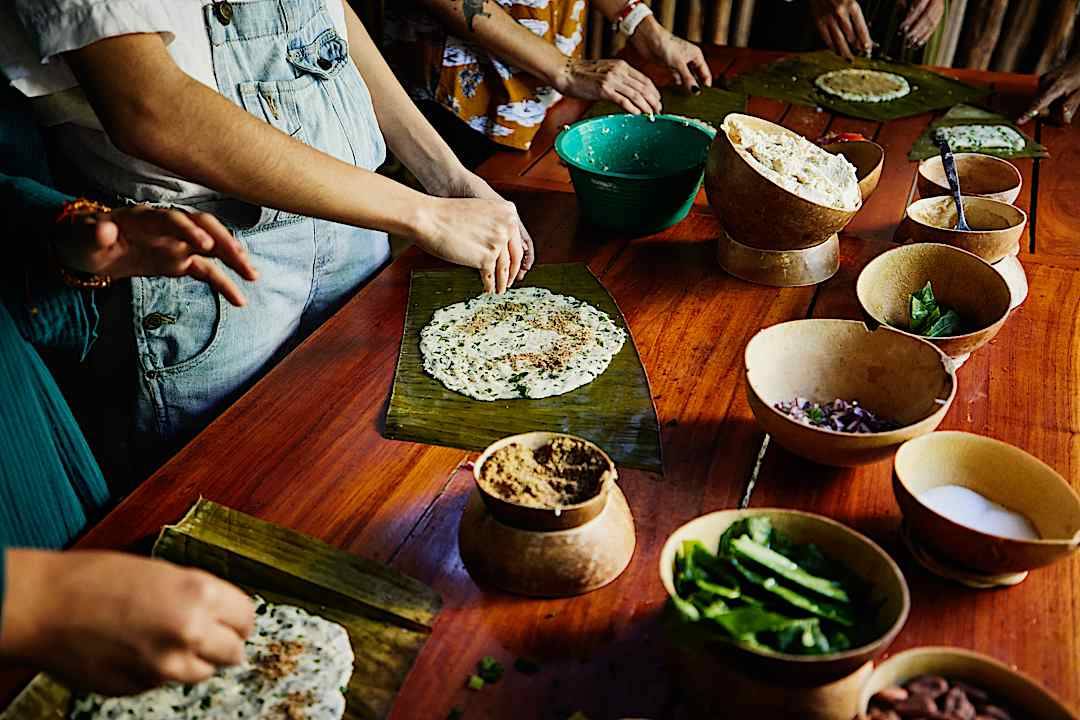
- Sadya tradition: Learn about, or be served, a sadya, Kerala's traditional vegetarian feast served on a banana leaf, understanding the order in which dishes are placed and eaten by hand, and the festival occasions, like Onam, the meal is built to mark.
- Spice farm morning: Visit a working plantation in the hills around Munnar or Thekkady to see cardamom, pepper vines, and cinnamon bark harvested before cooking with them the same day.
- Home kitchen warmth: Cook in a family kitchen where coconut is grated fresh, curry leaves are picked straight from the yard, and spice blends are adjusted from memory rather than measured out.
Where You May Cook
- Fort Kochi: Walk through centuries-old spice warehouses and markets before a class rooted in Kerala's trading history.
- Alleppey backwaters: Cook aboard a houseboat gliding through palm-lined canals, using ingredients sourced along the way.
- Munnar tea and spice country: Visit a working plantation in the Western Ghats before a class built around freshly harvested spices.
- Kumarakom: Learn in a quiet backwater village known for its houseboats and coconut-lined waterways.
- A Keralite family home: Cook in a household kitchen in or around Kochi, where recipes are passed down rather than written down.
Explore our Best of Kerala Tour: Elephanta Island, Cochin, Alleppey, Periyar, and Kovalam to see how a specialist can combine spice markets, backwater cooking, and Kerala's coastal history into a personalized itinerary.