Top 10 Destinations Families Love in 2026

Family on Cape Town beach where curiosity is activated rather than managed.

Cape Town, South Africa

In 2026, families are choosing travel that works for their children, not just for them. The most sought-after destinations are places where curiosity is activated rather than managed; where a child can stand inside a working fish market, press their hands into pasta dough, or watch a naturalist coax a bird of prey onto a leather glove and suddenly understand something no classroom could deliver.

Parents planning these trips are thinking beyond sightseeing checklists. They want experiences that create shared language, with memories that resurface at the dinner table years later. The best travel for families with children is not about managing energy levels or reconciling different mobility needs. It is about knowing that a 10-year-old standing at the edge of the Serengeti at dawn, watching a lioness cross the road, will carry something home that reshapes how they see the world. The destinations in this article were chosen because they make that kind of moment possible and because the infrastructure exists to make the whole journey feel effortless for parents.

Extraordinary travel begins with a human touch. Our destination specialists leverage a global network of experts to create itineraries that reflect your family's specific passions, your children's ages and interests, and your preferred pace. We focus on the details that define a premier journey, including exclusive-access tours, child-ready accommodations, and hyper-personalized service that anticipates your family's needs before you articulate them. By connecting you with the world's top boutique tour operators, we ensure exploration is effortless and distinctive, leaving you free to focus on the wonder of the world together.

1. Italy

Children in Tuscany where history and daily life unfold like a stage set.
Tuscany, Italy

Italy earns its place at the top of this list not because it is easy, but because it is endlessly readable to children. History, food, and daily life unfold in settings that feel more like a living stage set than a museum. A ten-year-old can lick gelato beneath columns that Julius Caesar once walked past and feel the gap between those two facts close into something real. That is Italy's particular gift to families: it makes the abstract tangible, and it does so deliciously.

  • Villa living as a home base: A restored Tuscan villa gives children something a hotel never can: a place that feels theirs briefly. They can race across lawns in the morning and collapse under pergolas at night while adults linger over wine and candlelight. The villa's kitchen becomes a natural classroom, with markets in the morning and pasta-making in the afternoon, providing a day that children remember with unusual clarity long after the trip ends.
  • Culinary apprenticeship: A morning at a historic estate learning to roll pasta or shape gnocchi turns cooking from a background activity into a skill children can take home. A local chef who explains why each region favors particular sauces gives children their first real lesson in the idea that food is geography. Recipes recreated in your kitchen months later will carry more meaning than any souvenir.
  • Coastal freedom: A private yacht along the Sardinian or Amalfi coast gives children the specific joy of swimming somewhere that feels discovered rather than scheduled, from a hidden cove to water that shifts from turquoise to deep blue and a lunch of grilled fish served just above the waterline. For children who are strong swimmers, jumping from the stern becomes the highlight of the trip.
  • History that connects to school: In Rome, a private guide can turn the Forum and Colosseum into stories of ambition, empire, and everyday life that click into place for children who have already encountered these names in class. Younger children respond to the narrative; older kids start asking questions the guide has to work to answer. That shift from passive listener to active interrogator is one of the things travel can do for children that nothing else quite replicates.
  • Mountain perspective: In the Dolomites, trails that range from gentle meadow walks to more challenging hikes let children set the pace and feel genuine accomplishment when they reach a viewpoint. The clean air and open landscape have a quieting effect on even the most overstimulated child, which parents tend to notice and quietly appreciate.

Best for: Ages five and up; particularly strong for ages eight to 16

Use our Italy Family Vacation: Rome, Florence, Amalfi Coast as the foundation for an itinerary tailored to your children's ages and interests.

2. Japan

Mother and daughter at Fushimi Inari where photos rarely capture the moment.
Fushimi Inari Shrine, Japan

Japan is that rare destination that impresses children and their parents in completely different ways. Children feel the immediate sensory drama: vending machines that sell everything, trains that arrive to the second, food that arrives as theatre, temples where silence feels thick enough to touch. Parents feel the structural relief: nothing goes wrong, nothing requires negotiation, and the accumulated ease of a country that takes hospitality seriously gives the whole trip a quality of rest that is genuinely unusual.

  • The train as experience: High-speed trains turn long distances into stretches of unhurried window-watching with views of rice paddies, coastal cliffs, and the cone of Fuji appearing briefly before disappearing behind clouds. Children who resist sitting still on a plane will press their foreheads to the glass for hours. The bento box served onboard becomes a small ritual that older children may request again on every subsequent leg of the journey.
  • Ritual immersion at a ryokan: A traditional ryokan introduces children to the idea that a building can be a set of instructions for how to behave: shoes off here, yukata on, tea in the garden. The onsen bath, taken as a family in a private outdoor pool surrounded by cedar and steam, tends to become something children talk about for years. Even adolescents, who are resistant to most things, find it hard to be unmoved by the quality of attention a ryokan brings to every detail.
  • Quiet access before the crowds arrive: A private early-morning walk through Fushimi Inari's gates or Kyoto's moss gardens gives children a version of Japan that photos rarely capture: gravel crunching lightly underfoot, lantern light still soft, the city not yet awake around them. These are the moments children describe when they come home: not the famous landmark at noon, but the version they got to see that nobody else did.
  • Food as guided exploration: From ramen counters to omakase dinners where each course arrives as a small surprise, Japan's food culture gives children a structured way to be adventurous. A chef who presents micro-seasonal ingredients like spring bamboo shoots or autumn mushrooms one dish at a time turns dinner into a lesson in seasonality and craft that intrigues even reluctant eaters. Many families find Japan produces their best food memories of any trip, precisely because the presentation makes the experience feel curated.
  • Regional contrast for older children and teens: Adding days in Hokkaido or Okinawa shows older children and teenagers how dramatically one country can shift from snowfields and hot springs to coral reefs and subtropical beaches. For teens especially, this kind of layering keeps a longer trip genuinely engaging rather than feeling like a repetition of the same experience in different postcodes.

Best for: Ages seven and up; particularly strong for curious kids and teens

Start planning with our Japan for Families: Tokyo, Kyoto, and Hakone Itinerary, then refine every detail with your Zicasso specialist.

3. Costa Rica

Family in Costa Rica where paying attention is how you earn the best moments.
La Fortuna, Costa Rica

For children, Costa Rica makes the natural world feel like a neighborhood rather than a spectacle. When a sloth is not a scheduled sighting but something a guide points out 30 seconds into a forest walk, children begin to understand that wildlife operates on its terms and that paying attention is how you earn the best moments.

  • Peninsula privacy: A private residence on a secluded peninsula gives children the freedom to set their own pace, with morning swims before breakfast and evenings on the terrace as the jungle chorus builds. Staff on hand for boat charters and guided walks means what the day becomes is largely up to the family. This kind of unstructured abundance is something children respond to instinctively, especially after the structured intensity of a school year.
  • Guided curiosity in protected reserves: Walking through a protected reserve with a private naturalist who can translate every rustle in the canopy into a species name and a behavioral story turns a forest walk into an education children don't feel is happening. A good guide calibrates the narrative to whoever is asking. A six-year-old and a 12-year-old get different versions of the same sighting, and both leave satisfied.
  • Volcanic journeys: Crossing a lake beneath an active volcano by private boat is the kind of cinematic moment that recalibrates a child's sense of scale. Ending at natural hot springs under a canopy of leaves, with the sounds of the forest around you and the warmth of geothermal water underneath, gives the whole day a quality of earned reward that feels different from a hotel pool.
  • Bean-to-bar insight: At small-scale cacao farms, tasting chocolate becomes a lesson in soil, shade, and the time behind everyday objects. Children who work through the process leave with a reference point for where food comes from that the classroom version of the same lesson never quite achieves. The chocolate at the end is better, too.

Best for: Ages four and up; particularly strong for ages six to 14

Use Zicasso's Family Trip to Costa Rica in 7 Days as a blueprint, then work with your specialist to deepen the eco-luxury focus for your family.

4. The United Kingdom

Family in UK where landscapes of the imagination finally become real.
The Lake District, United Kingdom

The UK has a particular advantage for families: a large proportion of children arrive already knowing it. Whether through the books they have read, the series they have watched, or the history they have studied, children often feel a pre-existing orientation toward this landscape that a Zicasso itinerary can activate and deepen. The moors, the cathedrals, and the cliffs are not just picturesque; they are already part of the child's imagination, waiting to become real.

  • Country traditions: Falconry sessions on estate grounds give your children the experience of handling a bird of prey that is genuinely unlike anything else on offer. It is the kind of activity that produces a particular quality of absorbed silence in children.
  • Lakeside luxury in the Lake District: Lodges with floor-to-ceiling windows, wood-burning fires, and private docks make it easy to shift between hiking, boat rides, and quiet afternoons indoors. Children who are used to screen time find that an afternoon rowing a lake in rain gear, followed by hot chocolate by a fire, produces a particular kind of satisfaction that is worth noting.
  • Roman echoes in Bath: A private historian can animate steaming pools and stone colonnades with stories of everyday Roman life. They may talk of soldiers complaining about the weather, merchants conducting business, and children scratching messages into curse tablets and throwing them into the spring. This specificity is what makes Roman history come alive for children.
  • Cornwall's coastal drama: Sea cliffs, harbor towns, and subtropical gardens offer children the pleasure of a landscape that has not been tidied up for tourism. Wild headlands for bracing walks, sheltered beaches for gentler days, and the ever-changing sky give each day a different texture. Children who need physical freedom respond to Cornwall in a way that more manicured destinations rarely produce.

Best for: Ages 5 and up; particularly strong for book-loving and history-minded children

Adapt one of Zicasso's tailor-made England, Ireland, and Scotland tours around your children's particular interests and ages.

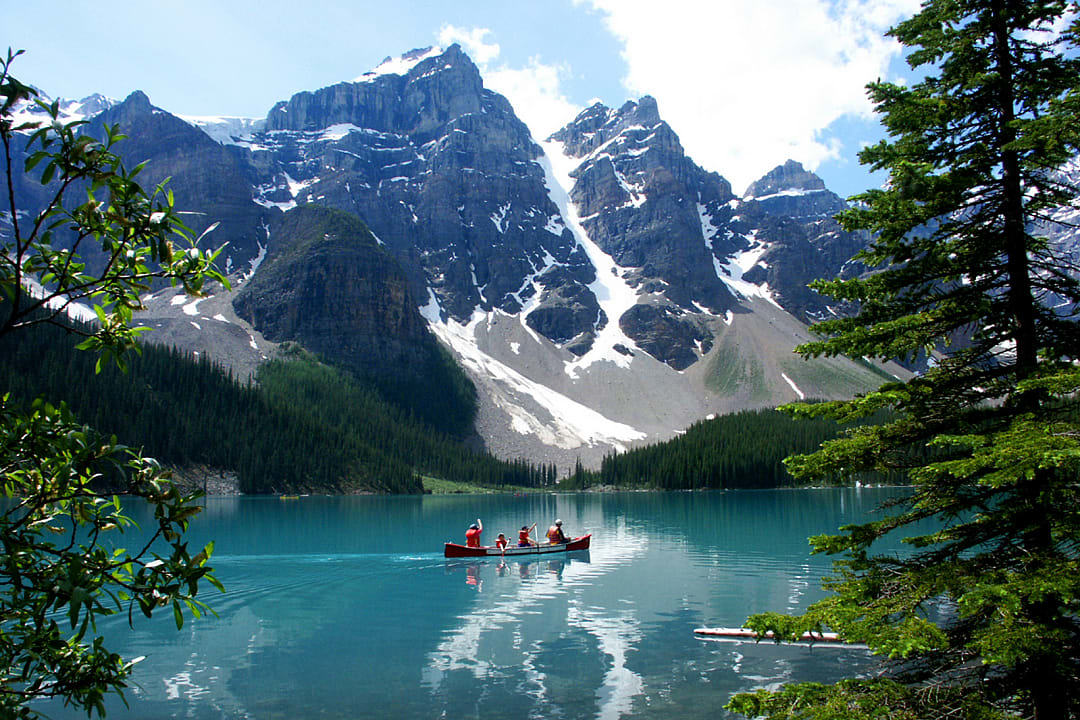
5. Canada

Family on Lake Moraine where mountains and forests are not backdrops.
Lake Moraine, Canada

Canada gives children something that is increasingly rare in the places most families tend to travel: genuine, unperformed wildness. Mountains that stretch beyond the frame, forests that seem to have no edge, lakes that catch every nuance of light, these are not backdrops; they are the point. For children who have grown up in cities or suburbs, Canada's scale is one of the most effective recalibrations available and the experience of feeling small in a landscape that is simply indifferent to your presence is, paradoxically, one of the most expanding things travel can offer a young person.

  • Lodge immersion in British Columbia: Adventure lodges in British Columbia offer days structured around wildlife viewing, kayaking, and forest walks, with evenings by the fire as darkness settles beyond the windows. Children who have been going at full speed all day tend to decompress here in a way that surprises parents who expect resistance. The combination of physical activity, genuine quiet, and high-quality food is something children find satisfying at a level they cannot always articulate.
  • The Rocky Mountaineer as moving classroom: A glacier suddenly appears, then a bear. A luxury sleeper train across the Rockies turns transit into the kind of shared experience that generates its own vocabulary in families.
  • Helicopter solitude: A private helicopter excursion to a remote ridge, followed by a gourmet picnic against a backdrop of untouched peaks and distant icefields, is one of those experiences children recall with unusual precision. The specific silence of a high alpine plateau is a sensory memory that tends to stay with them.
  • Quebec's French heritage: If your children are learning French, or simply drawn to the idea of a European enclave in North America, Quebec City's cobblestone streets, stone ramparts, and unmistakably French atmosphere give history a different texture. Pastries and steaming coffee at a sidewalk café, surrounded by a language that is familiar but not quite home, is one of travel's better small pleasures.

Best for: Ages five and up; particularly strong for active families and nature-minded children

Explore our Most Beautiful Places in Canada before refining a wilderness-forward journey for your family.

6. East Africa

Children in Kenya where world seen in documentaries is not make-believe.
Kenya, East Africa

East Africa does something to children that is difficult to replicate anywhere else on Earth. It shows them, in real time, that the world they have seen in documentaries or films is note make believe. A lioness crossing the road 40 feet from the vehicle. An elephant herd moving through evening light. The Milky Way overhead with no competing light for 50 miles in any direction. These are not the memories your children carry into adulthood.

  • Private camps, family pace: Exclusive-use tented camps in the Serengeti let your family wake to the sound of hooves and birdsong, and structure game drives around your children's energy levels. Children who are exhausted from a late night of wildlife sounds get a later start; those who are up at dawn can be out with a guide before breakfast. This flexibility, which is impossible in larger group safari contexts, is the single greatest argument for the private camp model for families with children.
  • Conservation as education: Guides who work closely with conservation researchers can explain tracking collars, migration data, and anti-poaching efforts in ways that turn every sighting into a layered learning moment. A lion is not just a lion; it is an individual with a range, a family structure, and a history in this particular ecosystem. Children who understand this leave with something richer than photographs.
  • Hot-air balloon at dawn: A sunrise hot-air balloon flight over the Maasai Mara reveals the river systems and plains from a vantage point that ground-level game drives cannot offer. Children gain a sense of the scale of the ecosystem that reframes everything they have seen from the vehicle. It is the kind of perspective shift that travel is uniquely able to provide.
  • Coastal decompression: Ending a safari on the coast of the Indian Ocean, with its powder-soft sand and warm water, gives children the experience of a trip with a clear emotional arc. They arrive at the coast having been rewired by the bush and the decompression that follows has its own distinctive quality.

Best for: Ages seven and up; particularly strong for ages 10-plus who can sustain focus and early mornings

Start with our best Kenya and Tanzania safaris, then work with your specialist to build a child-paced family safari with the depth and conservation focus your children will carry home.

7. South Africa

Lions in Madikwe where travel choices connect to outcomes in the real world.
Madikwe Game Reserve, South Africa

South Africa is the entry point many families choose for their first safari and not only because it is logistically easier than Tanzania or Kenya. The malaria-free reserves in Madikwe and parts of the Eastern Cape remove one of the primary medical concerns families face when traveling with young children. Add to that the quality of the Big Five experience in these areas, which is genuinely comparable to East Africa. Pair that with the cosmopolitan energy of Cape Town, one of the world's great family cities, and South Africa earns its position as the most well-rounded family safari destination on Earth.

  • Malaria-free family wilderness: Reserves like Madikwe offer Big Five sightings without the need for malaria prophylaxis, easing the logistics and the anxiety that can otherwise shadow a safari with young children. Rangers and trackers trained in family guiding can adjust the depth and pace of the narrative to different ages. A six-year-old and a 14-year-old on the same game drive receive entirely different but equally engaging versions of what they are seeing.
  • A city that works for children: Cape Town is one of those rare cities that is as compelling for children as it is for their parents. Take the cable car up Table Mountain, visit the penguins at Boulders Beach, and drive along Chapman's Peak with the Atlantic far below. It has the quality of a place that delivers its best moments without requiring effort to find them, which is precisely what parents need after the intensity of a bush schedule.
  • Conservation as shared investment: Choosing lodges with strong anti-poaching and community education initiatives lets children see how their family's travel choices connect to outcomes in the real world. When a ranger explains that a rhino's survival depends, in part, on whether families like yours choose to come here, children experience something that classroom environmental education rarely achieves: the sense that they are part of the story.
  • Milestone moments: Private bush dinners, sundowners on rocky outcrops, and guided stargazing under the southern sky lend themselves naturally to birthdays and milestones. Children who mark a significant birthday in the South African bush tend to use that trip as the measure for every journey that comes after.

Best for: Ages four and up; one of the strongest options for families with very young children due to malaria-free reserves

Use our Wildlife Wonders: 10-Day South Africa Vacation for Families as inspiration, and tell your specialist what ages your children are so the ranger briefings and activity pace can be calibrated accordingly.

8. Portugal

Family in Lisbon where hospitality toward children is a cultural instinct
Belém Tower in Lisbon, Portugal

Portugal's hospitality toward children is not a policy; it is a cultural instinct. Waiters crouch down to talk to a four-year-old, shopkeepers produce sweets from nowhere, and locals treat a small child's presence as an occasion for warmth rather than a logistical inconvenience. Portugal has an attitude toward children that is immediately felt and genuinely unusual. If you have spent trips in Europe apologizing for your children's existence, Portugal is your relief.

  • Lisbon for explorers of all ages: Lisbon's hills, yellow trams, and tiled facades give children a city that feels hand-scaled and navigable in a way that most European capitals do not. The viewpoints over the Tagus are reached on foot, the pastel de nata at the end is the reward, and children tend to feel they have earned their way through the day.
  • Coastal rhythm: Surf towns and coastal villages structured by tides and light rather than strict schedules give your children the gift of unscheduled time: slow breakfasts, beach walks, late-afternoon swims in water cold enough to produce genuine shrieks. For children who have spent a school year inside a timetable, this looseness is almost medicinal.
  • Heritage in tiles: Palaces and churches covered in azulejos give children a version of history told in narrative panels of blue and white that they can spend real time decoding. They are the kind of thing kids and adults can look at together, finding different things in the same image, which is one of travel's rarer pleasures.
  • The Alentejo at a different speed: In the Alentejo, cork forests, vineyards, and whitewashed estates set the scene for long meals and evenings where the pace drops noticeably. For children accustomed to constant stimulation, spending a day where nothing is scheduled and the afternoon is genuinely open produces a quality of rest that is worth building into any Portuguese itinerary.

Best for: Ages 3 and up; among the most child-friendly countries in Europe

For more inspiration, see our Portugal tours and vacations for families.

9. Greece

Child in Greece where mythology becomes a literal landscape to walk through.
Crete, Greece

Greece is one of the few destinations where the mythology children absorb in early childhood becomes a literal landscape to walk through. The Acropolis, the oracle at Delphi, the labyrinth of Knossos, these are names children often know before they can reliably spell them. Arriving in the physical places behind those names produces a particular kind of excitement that is recognizably different from ordinary sightseeing. Greece gives children the experience of a world they already half-know, made suddenly real.

  • Myth made real: Walking the Acropolis with a private guide who connects each column and carved frieze to myths children recognize from school or bedtime reading makes the stones underfoot feel charged in a way that is difficult to achieve through any other means. Children who have encountered Perseus or Athena in a book, then stand where those stories were first told, tend to come away with a different relationship to the history and the literature.
  • Island life as its own education: Islands like Crete and Naxos balance sandy beaches, mountain villages, and archaeological sites in ways that give children genuine variety within a single destination. A morning at a Minoan site, an afternoon in a hidden cove, an evening at a taverna where the owner brings extra bread for the children without being asked. This is the texture of Greece as a family destination and it is almost impossible to do wrong.
  • Living traditions: An olive harvest, a cheese-making demonstration, or a cooking workshop reveals that Greek culture is something practiced, not preserved. When your children help knead bread or pick herbs alongside a local host, they are not watching history; they are briefly inside it, which is a meaningfully different experience. These moments produce the particular kind of confidence children need to feel genuinely curious about places that are not their own.

Best for: Ages five and up; particularly strong for children who love stories, myths, and the sea

Use our Best Greece Family Vacation: Athens, Santorini, and Crete as a starting framework, then tell your specialist which myths your children already know. A good guide will build the whole narrative around their existing imagination.

10. Finland

hildren in Finland where chasing northern lights is a part of the memory.
Lapland, Finland

Finland offers something that most luxury travel cannot: the experience of genuine, productive boredom. In a country where days are shaped by lakes, saunas, and the movement of light rather than a schedule of activities, children discover that unstructured time is not empty time. They find things to do in a row across the lake or a competition to see who can stay in the cold water longest. The self-direction they exercise in finding those things is one of the more valuable things travel can give a child in 2026.

  • The elemental reset: Days in the lake country revolve around swims, rowboats, and forest paths, with phones genuinely forgotten on bedside tables as families fall into a gentler routine. For children who have been told all year to put their screens down, Finland provides the first environment that makes the choice easy, as there is simply something better to do.
  • The sauna as ritual: The sauna–lake cycle of hot, then cold, then hot again is woven into family life, with even young Finnish children joining their parents for gentle, closely supervised sessions. Children often approach that first dash into the cold lake with theatrical reluctance and then refuse to stop repeating the cycle; within a single afternoon, it becomes a shared family ritual, kept comfortable with moderate heat, short stints inside, and plenty of cool-down time. The particular quality of warmth and pleasant tiredness it creates at the end of the day settles over everyone, and for many children, this feeling becomes inseparable from their idea of Finland for the rest of their lives.
  • Winter magic: In winter, husky sledding and aurora watching replace streetlights with starlight. Chasing the northern lights with children is one of those experiences where the anticipation is itself part of the memory: the scanning of the sky, the false starts, the moment the green bands appear and someone shouts. The lights do not always come and children who experience that uncertainty, then the reward, understand something important about how the natural world actually works.
  • Design as environment: Finnish cabins and lodges, with their pale wood, large windows, clean lines, and the surrounding forest acting as the main decoration, give children an implicit lesson in the relationship between design and environment. They may not articulate it, but they feel the difference between a building that competes with its surroundings and one that defers to them.

Best for: Ages four and up; particularly strong for winter trips and families seeking a genuine digital detox

For more information on working with Zicasso travel specialists, see How to Plan Your Zicasso Trip in 4 Easy Steps.

Plan Your Family Journey

Children in Greece where experiences are more durable than a vacation.
Mykonos, Greece

The best family travel in 2026 is not about the destination, but what your children carry home from it. Whether that is the Italian word for a pasta shape they learned to make themselves or the memory of a lion at dawn, the experiences that last are the ones designed around what children are ready to absorb rather than what looks impressive in a photograph. Parents who invest in intentional travel give their children something more durable than a vacation. They give them reference points for scale, culture, and the quality of attention a place deserves.

By drawing on Zicasso's network of destination specialists and on-the-ground experts, you can ensure every moment of the journey is designed with your children's specific ages, interests, and sense of wonder at its center. For more inspiration, see our trips of a lifetime series. Then, fill out a trip request form and our travel specialists will be in touch.

30,000+ Verified Traveler Reviews