Istria, Croatia: A Guide to the Peninsula That Changed Countries Six Times Without Moving

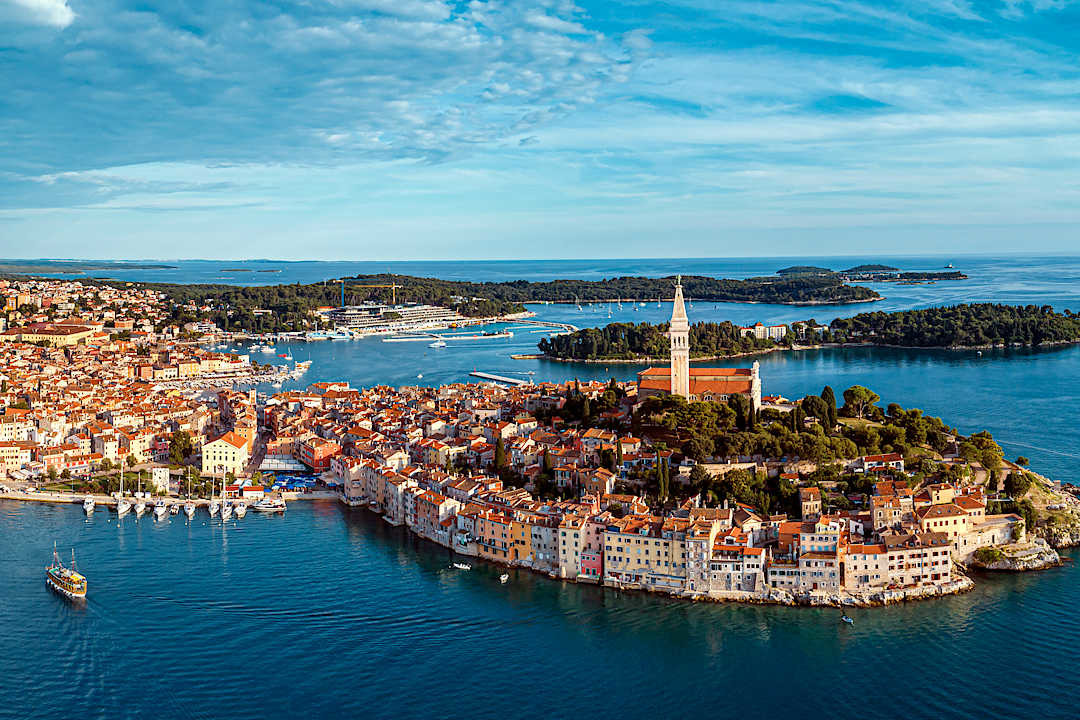
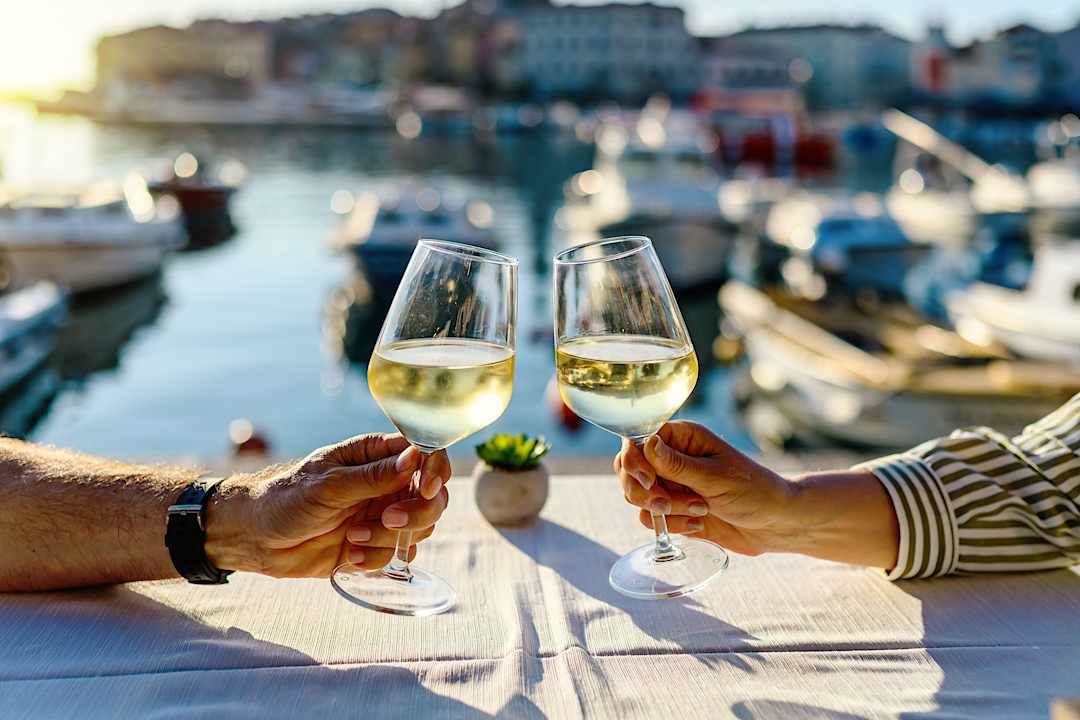
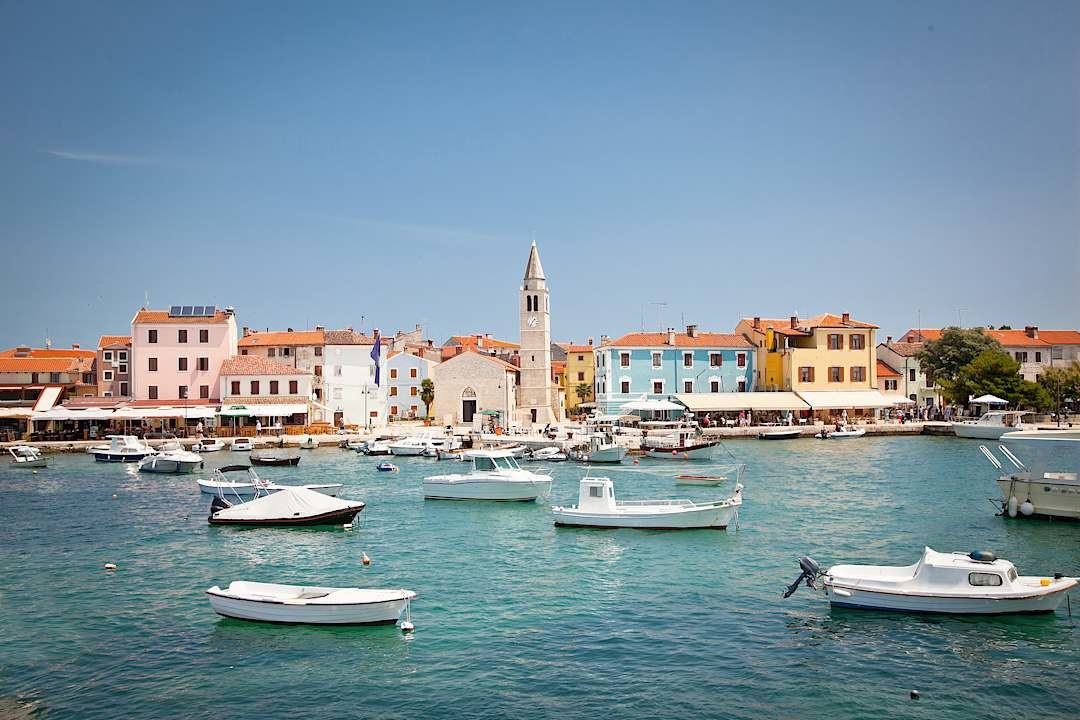
Harbor in Rovinj, Istria.

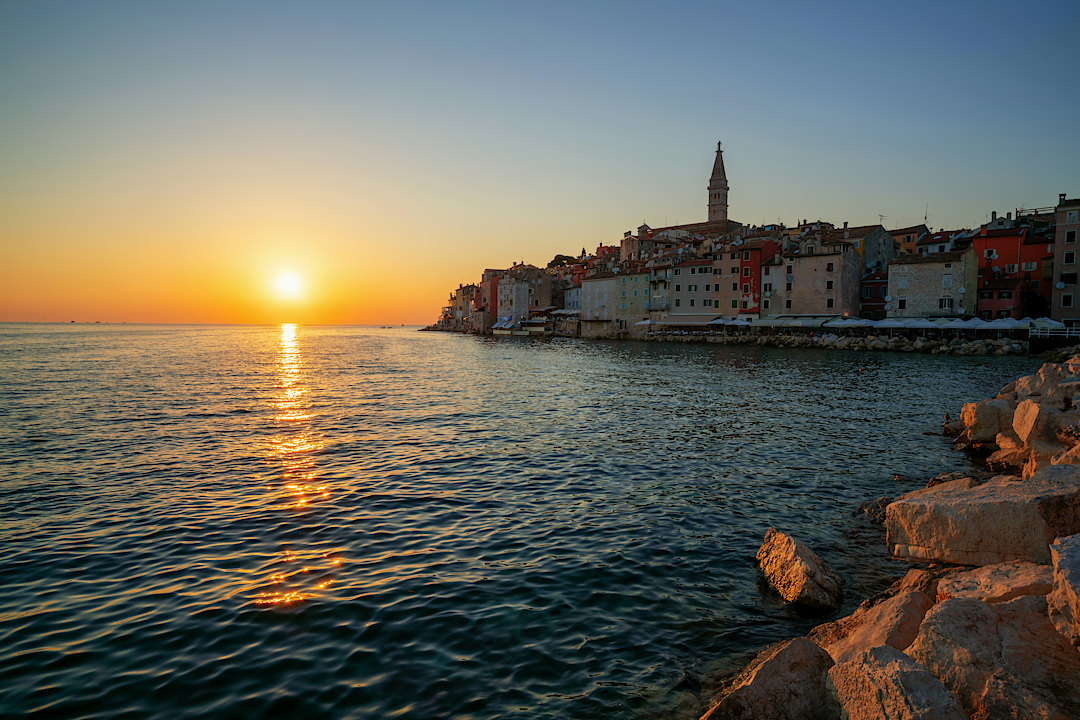
Harbor in Rovinj, Istria.

True luxury in Istria is the ability to differentiate the staged from the liberated. While typical guides treat the region as a seaside extension of the Mediterranean, the discerning traveler recognizes it as a distinct negotiation of identity. To truly move through Istria is to understand that the iron-rich red clay of the coast and the limestone-pale soil of the interior produce two different wines, and two different worldviews.

This guide moves beyond the Venetian facades to teach you the practical intelligence of Istrian travel: how to use language, timing, and geology to access the inherited knowledge with access most travelers will never know to look for: the konoba where a 70-year-old grandmother cooks recipes that nearly vanished during Yugoslavia's socialist period; the understanding of why late September through November is the only window that truly matters; the generational winemaker explaining family history over an unlabeled carafe of Malvazija. In a region where borders have historically been fluid, the stability of tradition is its own demonstration of luxury.

Extraordinary travel begins with a human touch, and our destination specialists design every journey with care, insight, and personal attention. As you consider a trip to Istria, use the following as a framework for understanding why certain moments, meals, and conversations here carry weight that no amount of money alone can purchase, and how to position yourself to receive them.

Understanding Istria: Why This Isn't 'Just Croatia'

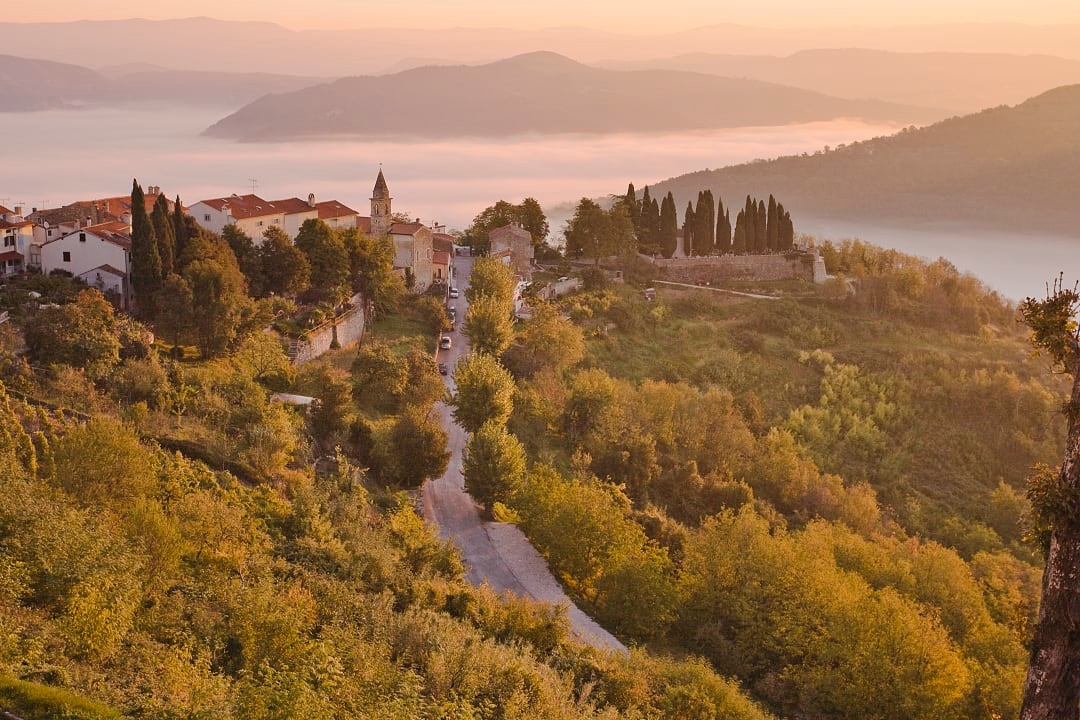
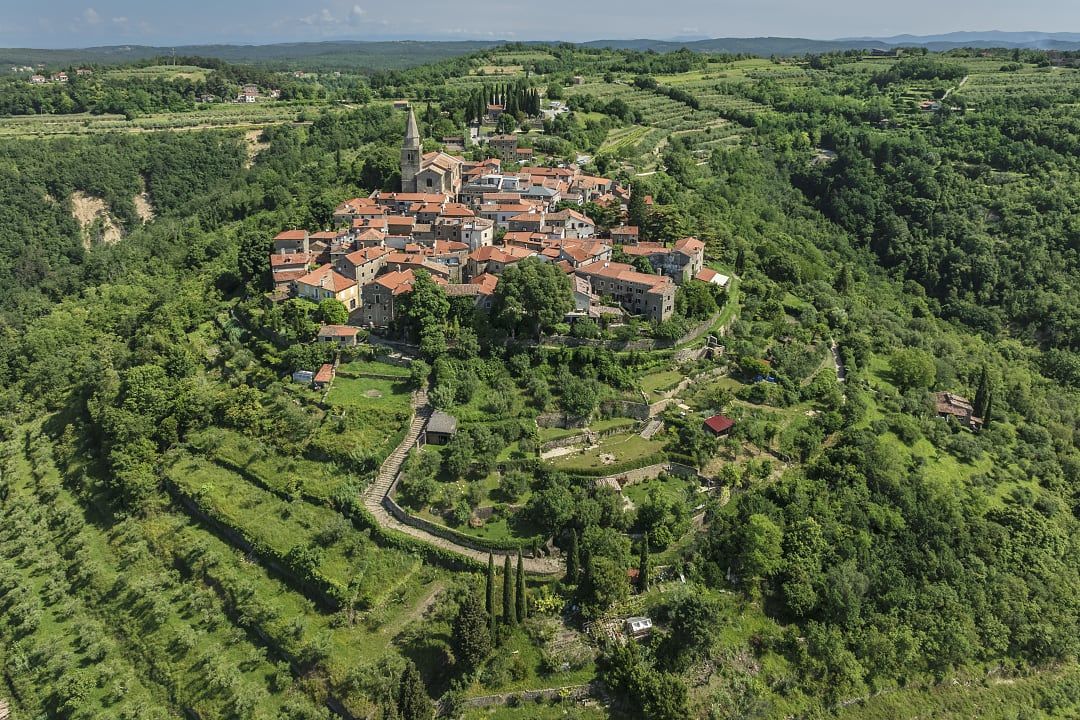
The town of Grožnjan, Istria.

Istria will reward you if you know how to read a destination. A carved stone above a doorway is still being argued about. A dual street sign is still a political act. The name "Grisignana," not "Grožnjan," above an old doorway tells you a border moved. Walk 10 minutes inland and two old men in a hilltop café are arguing in a dialect that is neither quite Croatian nor quite Italian, but something that evolved in the space between them. It belongs to that region and nowhere else.

Istria has been Venetian, Habsburg, Italian, and Yugoslav, and is now mostly Croatian. These layers didn't cancel each other out; they merged. A glass of Malvazija, an afternoon in a piazza, a conversation that shifts language mid-sentence: each carries more than its surface suggests.

Here's a seamless integration where the application flows naturally from geography's enduring imprint, eliminating the abrupt shift:

Geography as Destiny

Istria's position as a northern Adriatic headland of roughly 1,390 square miles, bordered by Slovenia to the north and the open Adriatic to the west and south, made it indispensable to every empire that wanted Mediterranean access and alpine control simultaneously. The Romans built here because the harbor commanded the sea lanes. Venice held it for five centuries because controlling Istria meant controlling Adriatic trade. Austria wanted it as a warm-water outlet for a landlocked empire. Italy took it for the completion of its national myth.

The peninsula's value has never been in its size, but in its position, and that strategic importance is written permanently into the architecture, cuisine, and the three languages that still circulate in a single conversation over a carafe of wine.

That imperial competition remains in every detail you encounter. With a private guide, you will learn how Venetian facades and Roman grids dictated where konobas sit and wines flow. At inland dinner spots, you will find that Habsburg-era trade routes preserved multi-language dialects. You will also avoid coastal tourist menus.

Then there’s the fact that dual signage acts as more than decoration; it’s an indicative map of power shifts. It signals towns like Rovinj as culturally hybrid, where ordering in Italian unlocks a grandmother's fuži recipe that survived from the Venetian salt trade. Villages like Motovun feel preserved because Roman-Venetian defenses kept agriculture stable amid flux. When in the region, look for konobas serving beef from native breeds that empires couldn't uproot.

As you move through the peninsula, look for the “seams” of local culture. A town with only Croatian signage will often place less emphasis on its Venetian past than a bilingual hub like Rovinj. Geography made Istria a perpetual crossroads, so travel it that way: match your dinner language to the era, read dual signage as a subtle power map revealing layered identities, and seek out preserved interior villages where culinary traditions endured precisely because empires once fought over this ground.

The Six Flag Changes: A 200-Year Timeline

To understand Istria, hold its political biography in a single frame. In 1797, the fall of the Venetian Republic ended five centuries of Serenissima rule and handed the peninsula to the Austrian Empire. In 1918, the end of the first World War transferred Istria to the Kingdom of Italy, making the town then called Rovigno officially Italian territory, a status that would last nearly 30 years. In 1947, post-war treaties transferred sovereignty to Tito's Yugoslavia, triggering the most consequential rupture in modern Istrian memory. In 1991, Yugoslavia's dissolution made Istria Croatian. In 2013, Croatia joined the European Union, placing the peninsula inside the same economic and political bloc as the Italy it once belonged to.

Each transition was painful. It required residents to renegotiate who they were permitted to be. The Rovinj your 70-year-old waiter grew up in was called Rovigno and was Italian. His school lessons were in Italian. The town did not move. The country did. This explains why dinner conversations switch language mid-sentence, dual signage is not aesthetic, and towns feel Venetian and Yugoslavian.

The 1947 Exodus: Establishing the Wound

You might find yourself sleeping in a beautifully restored stone house in Grožnjan one night, with fine linen and the smell of locally pressed olive oil from the breakfast tray outside your door. Then, at breakfast, you learn you are sleeping in a building abandoned overnight in 1947, when a post-war treaty moved the border without moving the town. The family who lived here packed what they could carry and left for Italy. The house stood open to the weather for 15 years. In the 1960s, a Yugoslav painter was given the keys. After independence, it was privatized. Now you are inside, eating bread made by the grandson of that painter, in a room that has held five different meanings within a single lifetime.

Between the late 1940s and mid-1950s, somewhere between 250,000 and 350,000 ethnic Italians left Istria in what historians call the “Esodo Istriano,” or Istrian Exodus. Some fled in fear. Others could not imagine life under communism. Still others departed because staying felt like a betrayal of the Italian identity they had been raised in. Those who remained navigated a new socialist federation in which the official language changed overnight, street names were repainted, and history was rewritten to exclude them.

This exodus explains the empty hilltop villages that became artist colonies, the bilingual street signs enshrined in law, and the particular weight of a name carved in stone above an archway that the building's current inhabitants did not put there. Understand this and Istria's layers cease to be picturesque details, becoming testimony instead. Today's bilingualism, enshrined in law across coastal municipalities, is a legal acknowledgment of a population that was here before borders were decided, that stayed when the borders moved, and whose children now navigate between languages as a daily practice of surviving history.

The exodus preserved villages like Grožnjan by emptying them, then encouraging artists to fill them. When visiting the destination, visit quiet studios for cello-backed dinners where Italian unlocks fuži recipes grandmothers guarded through socialism. Use Italian with elders to honor those who stayed behind. This indicates why some konobas serve Teran-pršut pairings intact from Italian eras amid Croatian flags. Inland feels culturally layered, not purely Croatian, because traditions were hybridized. Choose family spots for bread from exodus-abandoned ovens, where language signals respect.

Identity as Negotiation

Many Istrian residents describe themselves first as "Istrian," claiming the peninsula as a cultural space that pre-exists and outlasts any particular flag. This is an identity forged by people who watched borders move while they stayed still. Ask a 70-year-old fisherman in Rovinj in Italian where you are, and he may answer with a story about growing up when this was still called Rovigno. Ask a 30-something bartender in Pula the same question and you will hear about modern Croatia and EU membership. Both answers are true. Istria is a place where identity is not fixed, but an ongoing negotiation conducted daily over coffee and wine.

When you encounter dual toponyms like Rovinj/Rovigno, Pula/Pola, Poreč/Parenzo, or Motovun/Montona, using the Italian name with an older local is a respectful acknowledgment of their life experience. The skill lies in listening first: letting locals name their home and their history before you attempt to label it. Our travel specialists are well-versed in the cultural landscape and will prepare you for these moments so the first conversation you have in a Rovinj bar opens a door rather than closing it.

Istrian identity demands respect for language. Italian for elders evokes pre-exodus Rovigno, unlocking unlabeled carafes and fuži stories; Croatian for youth accesses EU-era innovations in konobas. Dual signage showcases negotiation, making towns feel hybrid, not "purely Croatian. If you pause to note Italian names on arches, locals may be prompted to share why preserved villages like Oprtalj hold multi-layer menus. Culinary traditions survived due to negotiation. For example, grandmothers teaching bilingual kids.

Contact our travel specialists to arrange a Best of Croatia Tour: 12-Day South to North, during which you can fully immerse yourself in this fascinating history.
When to Visit: The Golden Window

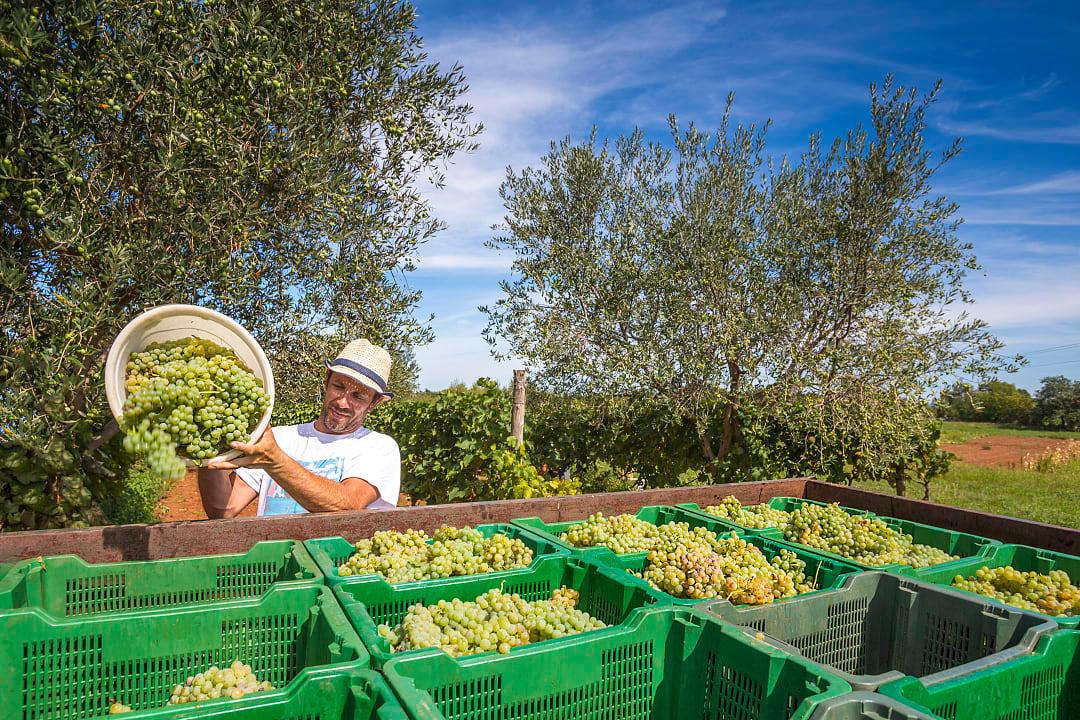
Vendemmia on a farm in Pula, Istria.

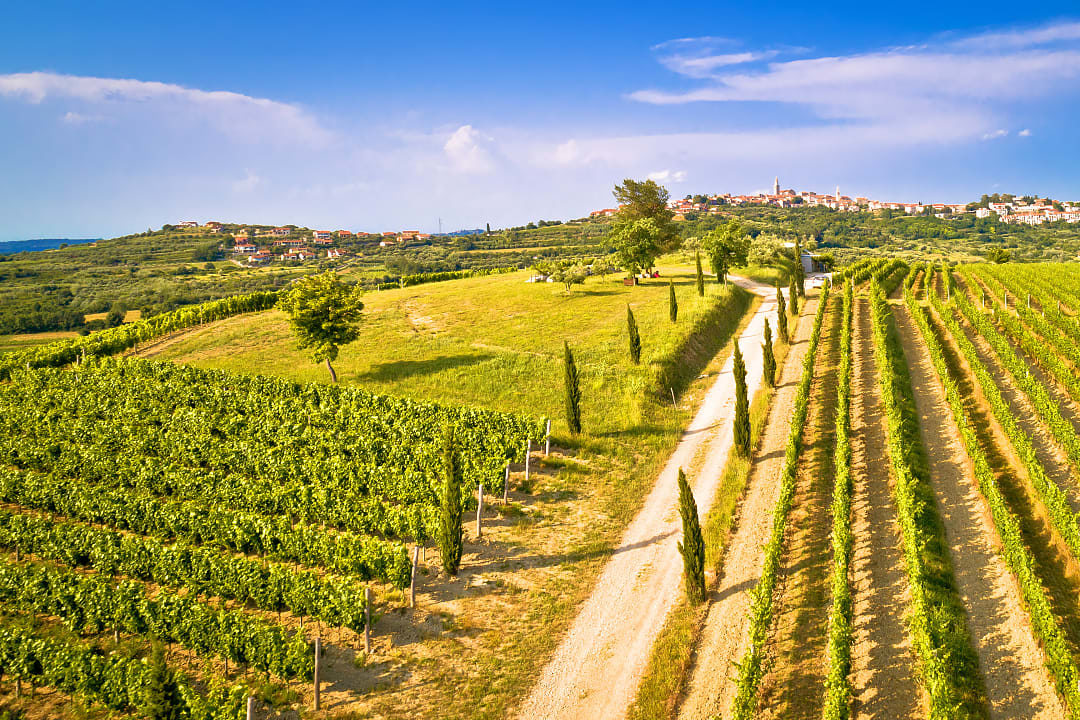
Two calendars govern this peninsula and they rarely sync. The coast runs on tourism time: peak season from June to September, with crowds that in August transform medieval lanes into queues and evenings into a warm, noisy blur on the promenade. The interior runs on harvest time. The year is structured around when grapes ripen, truffles fruit, olives drop, and wild asparagus pushes through the forest floor. These two clocks produce entirely different Istrias. By understanding both, you have an enormous advantage over travelers who simply book based on weather and cost.

Why Seasonal Precision Equals Luxury Access

In August, rooms are available and businesses are open. In coastal towns, they are open at a scale the region cannot sustain with any grace. You will be eating preserved truffles on pasta in a konoba cooking for 120 people, when last November it cooked for 12. You will meet tour operators, not truffle hunters. You will queue. The weather is hot, the sea is at its most swimmable, and the sunsets are undeniably beautiful, but the very conditions that make the coast easy to market make it harder to see how people actually live. Luxury travel reverses this: you decide when the destination is most itself, then arrange your life around that window.

High Summer (June–August): Long days, warm seas, and guaranteed terrace weather make this the season for you if you want to live on the waterfront, taking late swims and boat trips, with visits to harbor bars that hum past midnight. White truffles are not in season, so any white truffle menu is drawing on preserved stock. Even in the interior, the pressure of coastal tourism spills inland. Black truffles are available with legitimate operators year-round, but the deep hospitality of the interior is buried under the volume because the konoba grandmother does not have time to sit down and the winemaker has no time to talk. Choose this window if your priority is heat, sea, and social energy, and accept that intimacy will be harder to come by.

Harvest Autumn (late September–November): This is when weather and culture align. Days are still mild enough to eat outside at midday. By October, you may need a jacket at night, but the sea stays swimmable well into the month. White truffles begin emerging from the Motovun forest floor in late September. By November, the season reaches full pitch and valley fog fills the Mirna basin at dawn, turning hilltop towns into floating islands of stone. Vendemmia, the grape harvest, opens winery doors that stay closed the rest of the year and the people pouring your wine are the ones who picked the grapes. The coast empties significantly, but restaurants stay open for locals and the few visitors who come on purpose. The grandmother has time. The winemaker sits down. The truffle on your plate was in the ground this morning.

Quiet Winter (December–March): The coast largely shutters and storms can close in, but when the sun breaks through, the light is crystalline and the streets belong almost entirely to residents. Black truffle season deepens, hearty stews fill interior konoba menus, and olive oil pressing in December and January means you can taste neon green, aggressively peppery oil that was still on a tree 48 hours ago and is nothing like anything available in a shop. This is Istria as locals experience it nine months of the year, with short days that encourage long lunches, woodsmoke, and conversations that run until dark. Visit at this time if you care more about production cycles and quiet than guaranteed terrace weather.

Asparagus Spring (April–May): Wild asparagus, or šparuge, pushes through the same oak floors that hide truffles in autumn. Pencil-thin and intensely bitter, it is scrambled with eggs in konobas that will not have it again until next April. The weather is unsettled, but the mornings are cool, afternoons clear, and the first days are warm enough for coffee outside in a light jacket. The Parenzana trail is cool enough to ride properly, the coast wakes without summer’s weight, and everything begins to open. It is the time for you if you like the shoulder-season advantages of fewer crowds, active landscapes, and the sense of watching a place come back to life

The Scent of the Season

If you want to know which Istria you are in, smell the air.

In October and November, you will find the aroma of woodsmoke drifting between stone houses and the metallic dampness of turned soil. That scent signals production, like olive pressing, fermenting must, and then the sounds of truffle hunts at first light. It’s a demonstration of the peninsula in a working state, rather than a performative one.

If instead you smell fryer oil and sunscreen, you are witnessing a staged version of Istria; vibrant, social, and pleasurable, but oriented outward. Neither is wrong. But they are not the same.

The Strategic Move

If you can only make one trip, choose late September to early November. The former gives you the last warm swimming water, the first white truffles, and vendemmia in the vines. It still feels like late summer and evenings are cool enough for a jacket and a fire. Early November gives you peak white truffles, the famous valley fog at dawn, and coastal towns where the restaurateur knows your name by the second evening because you are one of perhaps 40 guests, not 400. This is the window when Istria exhales, belonging to those who time their visit for the moment when the peninsula is most itself, not most convenient.

Traveling with children shifts the definition of the “best” season as sleep patterns, school calendars, and stamina can matter more than peak truffle or harvest dates. The same four seasonal windows apply, but each rewards a different kind of family at a different stage.

Very young children (up to five)

For toddlers and preschoolers, stability and routine matter more than events. Late May to mid-June and mid-September offer warm-enough weather for short sea sessions without the full heat and crowds of August. This makes naps, early bedtimes, and stroller walks through old towns far easier. Inland hill towns in these shoulder weeks give you quiet streets, short, manageable drives, and konobas that can accommodate early dinners without pressure. High summer is possible, but you will spend more energy managing heat, noise, and overstimulation.

Primary-school age (six to 11)

This group benefits most from shoulder seasons. April to May and late September to October give you active landscapes and mild temperatures for cycling short stretches of the Parenzana, walking city walls, and doing short truffle or asparagus outings without overheating or battling crowds. Harvest autumn works particularly well for curious kids who want to see grapes being picked, meet truffle dogs, and watch fog roll through valleys. It anchors the trip in concrete experiences they will remember. High summer is still appealing for this age in terms of warm sea, ice cream, and long evenings, but you trade ease of access to locals and quiet conversations for pure coastal fun.

Teens (12 to 17)

Teens can tolerate and even enjoy the social energy of June to August, especially if your base has easy water access and day trips that combine physical activity with stories. It’s time to cycle Parenzana stretches, climb campaniles, and swim off rock platforms near Rovinj or Pula. For teens who are more introverted or academically inclined, late September to early November is ideal, as they can engage with history, politics, and food culture without the distraction of peak-season crowds, and will often respond strongly to experiences like olive-oil tastings, winery visits with serious storytelling, and seeing how borderlands work.

Blended or multi-generational families

When your group spans from very young children to grandparents, aim for early June or mid to late September; no one is fighting extreme heat or closed coastal infrastructure. A coast-plus-interior split works well: a base in Rovinj or Pula for swimming and easy dinners, plus two to three nights inland where older family members can linger over lunches and younger ones can run around hilltop ramparts between courses. Ask your specialist to sequence driving days so they fall between stays, not inside them, and to keep any Parenzana or truffle experiences short and focused rather than full-day epics.

Let our travel specialists customize our sample One-of-a-Kind Tour of Croatia to your preferences.

The Three Istrias: A Peninsula in Three Registers

The harbor of Rovinj, Istria.

Think of Istria as three distinct landscapes, each operating on its own internal logic.

  • On the coast, the day begins before dawn: Fishing boats already out, the harbor light low, and salt in the air before you have opened your eyes. By evening, aperitivo glasses catch the last light behind the campaniles. On the harbor, the working maritime and tourist economies still coexist, sometimes uneasily, sometimes in a way that produces exactly the friction that makes a place feel alive.
  • Inland, the clock follows the harvest: Fog burning off the valley floor by mid-morning, a dog working in silence through the oak undergrowth, a konoba that opens when the grandmother feels like cooking and closes when she does not. The pace here is not slow. It is calibrated to life before tourism.
  • In the borderland along the old Parenzana corridor: Here, geography tells the story words struggle to convey. A former railway station that was Austro-Hungarian in 1910, Italian in 1930, Yugoslav in 1960, and today serves natural Malvazija to cyclists from three countries. This is the borderland's specific character. It layers every distinction that has been imposed here, accumulated in the same walls, and readable if you know how to look. The Parenzana trail threads through all of it: a single cycling route that once required six passport stamps to complete and now requires none.

The Coast: The Venetian Facade

The harbor of Roving, Croatia.

Rovinj (Rovigno): The Photogenic Harbor

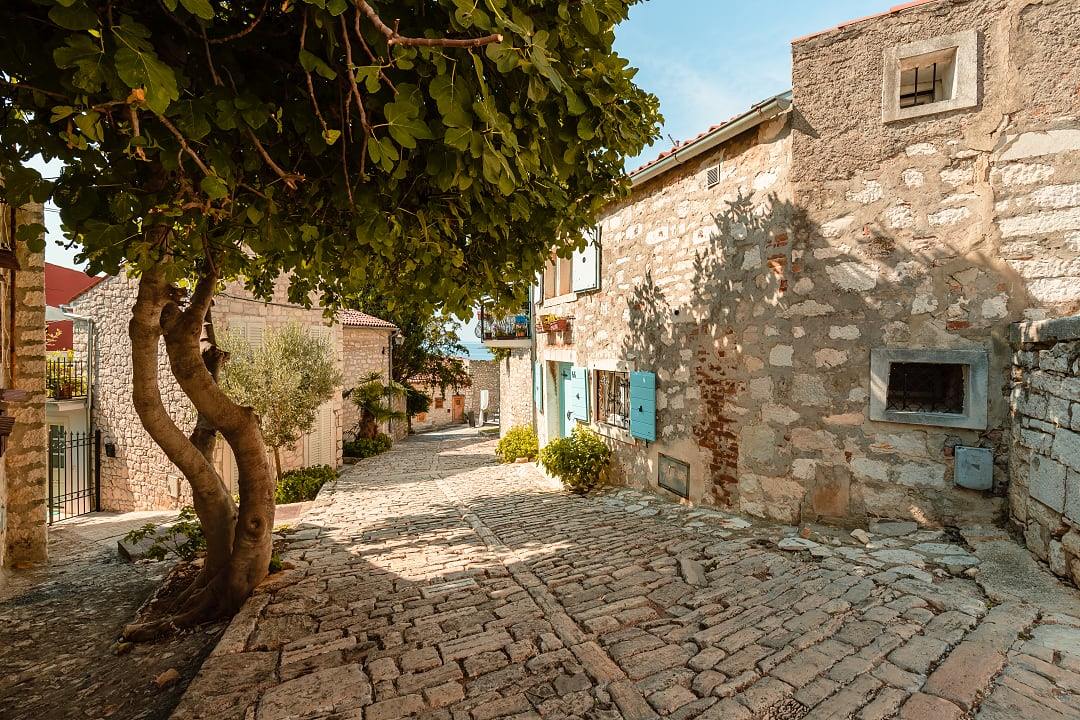
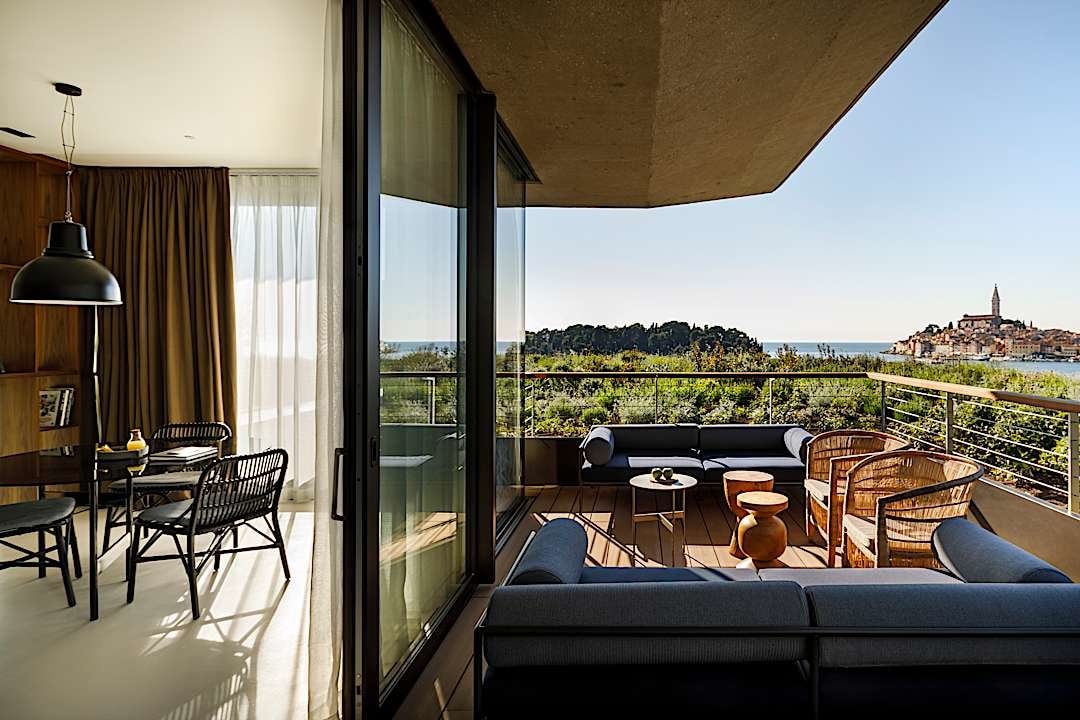
You smell Rovinj before you understand it. Pine resin and salt, coffee and woodsmoke drifting through compressed medieval streets as you climb toward the church. The old town was literally an island until 1763, when the Venetians filled the channel to connect it to the mainland. That island logic still governs the architecture. Houses lean into each other overhead. Alleys barely wide enough for two people terminate suddenly at the sea or open without warning onto small squares where cats arrange themselves on warm stone with the proprietary authority of animals who have been here considerably longer than visitors.

The pastel facades you photograph were not an aesthetic accident. They were mandated by Venetian law, specific colors assigned to specific guilds: yellow for merchants, pink for nobles. This is a 500-year-old urban code that survived six regime changes without a single bulldozer. What reads as beauty is a document of who ruled when and why it mattered.

At the summit stands the campanile of St. Euphemia, built between 1651 and 1677 as a deliberate replica of St. Mark's campanile in Venice. Its copper weather vane rotates to show wind direction. This is not nostalgic architecture. It is imperial DNA designed to announce that Venice controlled this horizon, remaining legible for 300 years.

The risk of any town this photographed is that it becomes a shell of itself, preserved in amber for visitors who will never understand what they are actually looking at. Rovinj survives this because the Venetian architecture is not a backdrop. It is the living operational system of a city that still thinks in Venetian spatial terms. You feel this in the sight lines, compression of the lanes, and the way every alley opens onto water or sky.

To understand the true geography, walk 15 minutes south to the Zlatni Rt forest park, where ancient Roman cypress groves press to the water and the sea is clear enough that the shadows of your legs are visible twenty feet below. This is where Rovinj's residents go, away from the harbor theater, and it tells you more about the place than any campanile.

Come in July, and the alleys fill with voices in five languages and menus in six. Come in May or late September and the fishers are back on the docks before day visitors arrive, the restaurants are cooking for 50 people instead of 500, and the chefs remember why they became chefs.

Best time to visit: September, post-summer crowds with the sea still warm, or May, before the season fully opens.

Skip: the Grisia Street open-air art show in August, a tourist event the town tolerates rather than celebrates.

Pula (Pola): The Roman City Still Working

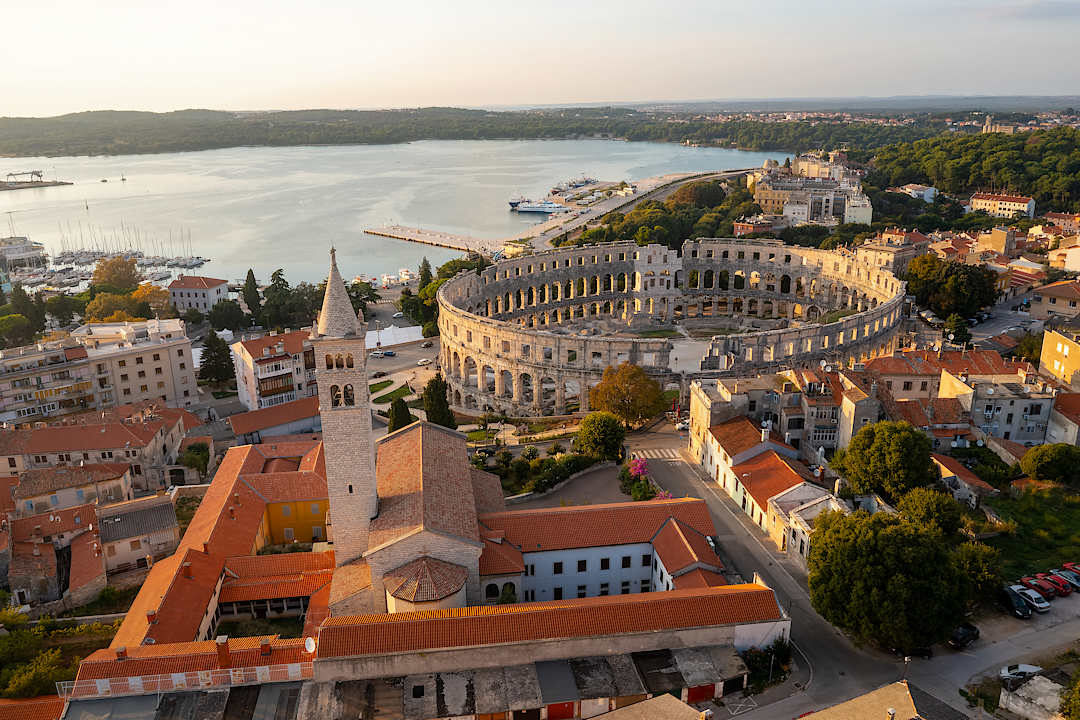
You round a corner on the harborfront and it appears: a wall of limestone arches stacked three stories high, warm grey in the morning light. The Arena is simply there, enormous and matter-of-fact, the way genuinely ancient things often are. The walls are 105 feet high on the seaward face. Inside, stone seating for 23,000 people descends to a floor where the underground passages still smell of cold rock and old darkness.

In the 1580s, the Venetian Senate proposed dismantling the Arena and rebuilding it inside Venice. One senator, Gabriele Emo, argued against the plan and won. A plaque on the second tower commemorates him. That the building is still here, the sixth-largest Roman amphitheater in the world and the only surviving one to retain all four outer towers, is partly his doing. Attend a summer concert and you will sit on those 2,000-year-old stone seats while sound systems route music through acoustics the Romans engineered for this purpose. Unlike the Colosseum in Rome, preserved behind barriers as a museum object, the Arena is still doing its job.

What most visitors miss entirely: The underground passages tell the story of the supply chain that kept 23,000 spectators fed. The Temple of Augustus still anchors the civic square as it was designed to do, the gods inside having changed, but the spatial logic entirely intact. The Roman city grid still governs where streets run. Pula is a working port city with active shipyards and a morning market geared to people buying lunch, not souvenirs, which is precisely what makes it honest.

Best time: May or September, when the Arena can be appreciated without the press of summer tour groups.

Poreč (Parenzo): The Byzantine Jewel

Most visitors walk through the Euphrasian Basilica as an afterthought on the way to lunch and miss entirely what they are looking at. Come prepared. The 6th-century mosaics in the apse, UNESCO World Heritage-recognized since 1997, set gold-ground figures against saturated blue and crimson. These objects are theological arguments made in glass and gold by artists who understood that the face of a saint could hold a gaze across 15 centuries if rendered with sufficient psychological specificity. Stay long enough with a private historian guide and the gold shifts as the sun moves, details emerging in the smaller portrait medallions that a rushed visit will never allow.

The building still functions as an active parish church. Attend a Sunday service and you are surrounded by art that predates the Carolingian Empire by 250 years. The silence available here outside the cruise-ship window is among the finest in the Adriatic. Poreč itself has been largely consumed by resort infrastructure, so visit the old town for two to three hours, see the basilica properly, and move on. The nearby accommodation zones are functional for families seeking beach stays, but have no bearing on the Istria described in this guide.

Seafood and the Limski Fjord

Six miles of steep forested limestone walls hold water of a particular green-blue shade found almost nowhere else on the Adriatic. This flooded karst valley, formed by the same geological processes that riddled the interior with cave systems, is home to shellfish farms producing the region's benchmark oysters and mussels, fed by cold freshwater springs seeping through karst from the interior.

The experience worth having is not a photograph of the water. It is the oyster opened to order at a simple restaurant at the fjord mouth, placed in your hand with nothing but lemon and a glass of Malvazija. That oyster was in a cage in the water you are looking at. Do not order "Limski Fjord oysters" on a menu in Rovinj two days later. The difference between tasting the sea as it is and tasting a memory of it is the entire point.

What to Prioritize and What to Skip

Not every coastal town warrants equal time. Umag is primarily a tennis tournament city with generic resort infrastructure. Novigrad is pleasant, but it offers nothing Rovinj does not do more completely. Fažana serves as the departure point for Brijuni and is worth knowing for that purpose alone. Our travel specialists can include all regions in our sample Splendid Cultural Tour of Croatia. Contact them today to plan your journey through Istria.

Who Should Base Themselves Here

These smaller coastal towns work best as focused visits rather than primary bases. If you are happy in self-contained accommodations like resorts and care more about tennis than atmosphere, you may find Umag convenient. However, if you are a culture-seek, you will quickly run out of reasons to stay. Novigrad suits those who want a quieter day trip with a promenade stroll and a meal by the water, yet anyone craving depth, architecture, or dining will be better served anchoring in Rovinj and visiting Novigrad briefly. Fažana is ideal as a launch point to Brijuni, but beyond that ferry access, it functions more as a practical gateway than a destination worth dedicating nights to.

How to Avoid Common Errors

The most common mistake is treating every coastal town as interchangeable and allocating nights to places that are better experienced in a well-structured afternoon. Avoid using Umag, Novigrad, or Fažana as your main base if your priorities are food, architecture, and layered history. Instead, center yourself in Rovinj or Pula and let these towns serve as targeted excursions. Do not overbuild your itinerary around Brijuni departure times from Fažana. Your specialist can sequence that day without sacrificing evenings in more character-rich locations. Resist the temptation to “collect” towns for the sake of a checklist and ask your travel specialist to design days that link a quieter harbor stop with inland villages or wineries so each visit earns its place in the itinerary. Our travel specialists can include all regions in our sample

Splendid Cultural Tour of Croatia. Ask them to ensure these coastal towns are used precisely, rather than diluting your time in Istria’s strongest bases.

The Interior: The Agrarian Heart

Hilltop of Motovun, Croatia.

Motovun (Montona): Floating Above the Fog

The alarm goes at 5.45am. Outside the window of your hilltop room, the Mirna Valley is invisible. The temperature inversion has done its work overnight and the fog sits below you like a white inland sea. Hilltop towns like Oprtalj and Grožnjan break through it like distant islands. You pull on boots and walk the ramparts alone in the cold, and for perhaps 40 minutes, until the sun burns the inversion away, Motovun is actually floating. This happens every clear autumn morning and the only price of admission is the alarm.

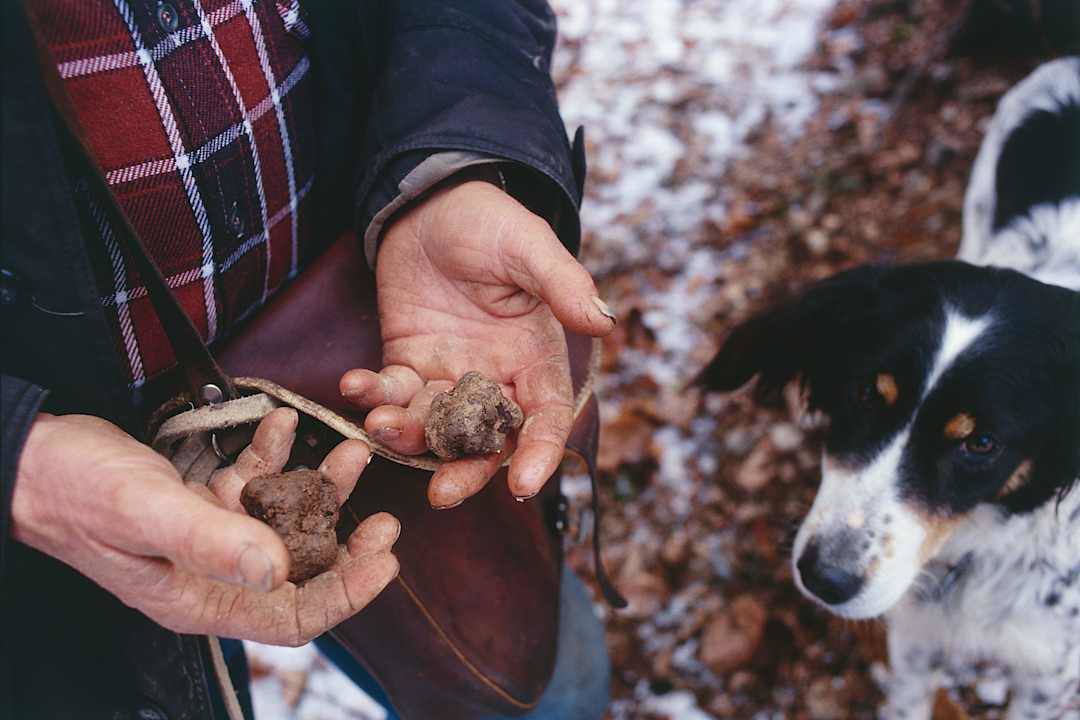
Later, in the oak forest below the walls, the hunter's dog stiffens mid-stride and begins to dig at the base of an oak root. The hunter moves her aside and excavates carefully with a blunt-ended tool, working around the mycelial network. What he holds up is the size of a golf ball, pale and irregular, and its smell reaches you immediately, ancient and animal, a compound your brain files instantly as extraordinary, something you will recognize for the rest of your life. This is the w

Grožnjan (Grisignana): The Physical Legacy

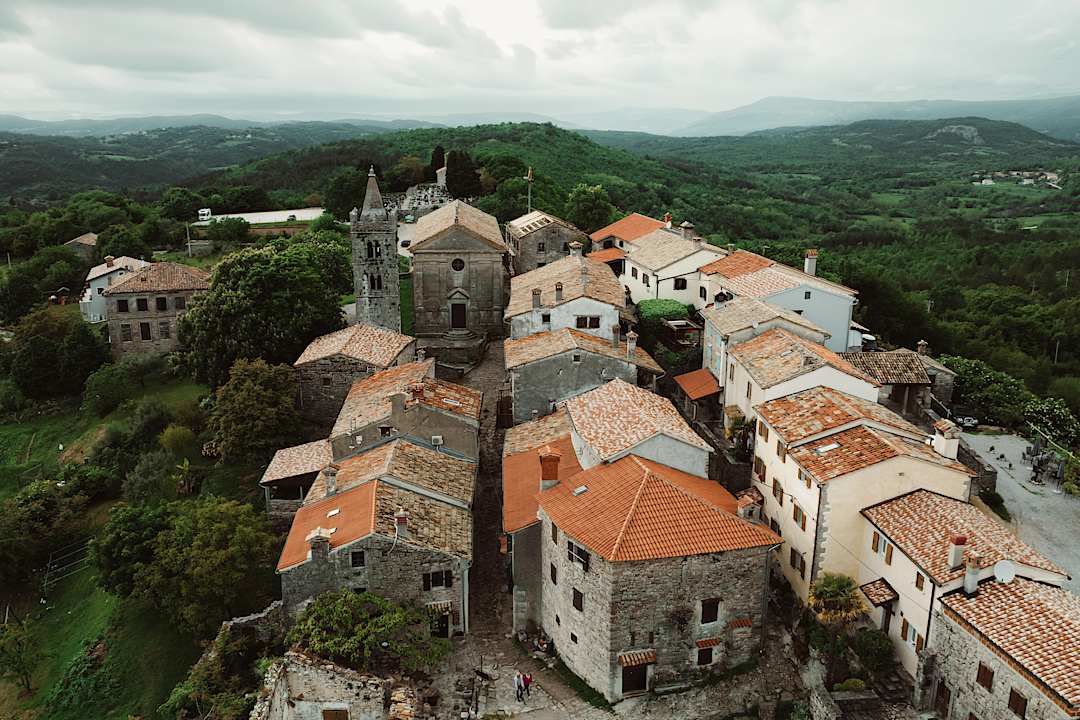
This is the physical legacy of the exodus: empty houses reclaimed by artists. If you walk into Grožnjan in the off-season, you notice the silence first, then what fills it: a cello from behind a wooden door for a studio window showing a painter with their back to you, their canvas propped against what was once a Renaissance-period loggia wall.

The honey-stone houses around you were mostly empty for 15 years after 1947, when the post-war border shift evacuated the Italian-speaking population almost overnight. In the 1960s, Yugoslavia's government invited artists and musicians to fill the void with studios and living quarters in abandoned houses. The result is a village where galleries inhabit medieval loggias, a jazz festival fills streets, and the carved name Grisignana above the main arch reminds you that this building never changed countries, but the country around it did, three times.

Look closely at the doorframes and the quality of the stone. In Grožnjan specifically, the crest above a doorway has been deliberately blurred out on original Exodus houses. What might appear to be a boutique or studio becomes a structure marked by departure.

Most hilltop towns across Europe face depopulation. Grožnjan represents a specific attempt to answer that through cultural resettlement. Understanding this transforms what might read as a picture-postcard artist village into a conscious attempt to refill absence with meaning and an ongoing experiment in whether culture can sustain what economics alone cannot. In summer, 30-plus galleries and studios are open and the July jazz festival draws crowds. In April, May, or October, five to 10 working artists remain.

Visit the interior on our sample 10-Day Honeymoon Vacation, which can be customized to your liking by our travel specialists.

What to Prioritize and What to Skip

Inland Istria rewards selectivity. Hill towns like Motovun, Grožnjan, and smaller villages along the truffle and wine routes offer far more depth than a scattershot drive-through of every settlement on the map. Some villages are little more than a photogenic piazza and a single café, charming for a stop, but thin as a base. Others combine serious food, working vineyards, and enough walks and viewpoints to justify multiple nights. The key is to prioritize places where restaurants, wine bars, and producers are there for locals first and visitors second.

Who Should Base Themselves Here

If you are happy to trade a seafront promenade for dawn fog in valleys, truffle hunts in oak woods, and evenings that end in a konoba rather than a cocktail bar, then the interior is for you. If you idealize long lunches, vineyard visits, and a focus on harvests rather than harbor traffic, a hill town will feel exactly right. If you are restless without nightlife, shopping, or frequent restaurant rotation, you may be happier visiting these towns as day trips from the coast. Those who love wine regions, small producers, and walking from one stone village to the next will find that basing inland turns Istria into a lived-in landscape instead of a series of viewpoints.

How to Avoid Common Errors

The main mistake inland is treating hill towns as interchangeable and racing between them, collecting postcard views instead of allowing one or two to unfold over time. Avoid building an itinerary that hops every night; choose a central base and let your specialist shape loops through truffle country, vineyards, and neighboring villages. Do not assume that every “pretty” town has serious food. Ask for reservations at places where producers eat, not just where the terrace photographs well. If you are doing a self-drive tour, be realistic about driving after long lunches and tastings by structuring your days so your longest drives happen before or well after wine visits. Finally, let your travel specialist connect you with local guides, truffle hunters, and winemakers in advance so your visits become conversations rather than transactions and the landscape begins to speak in a language no itinerary alone can teach you.

The Borderland: The Shifting Line

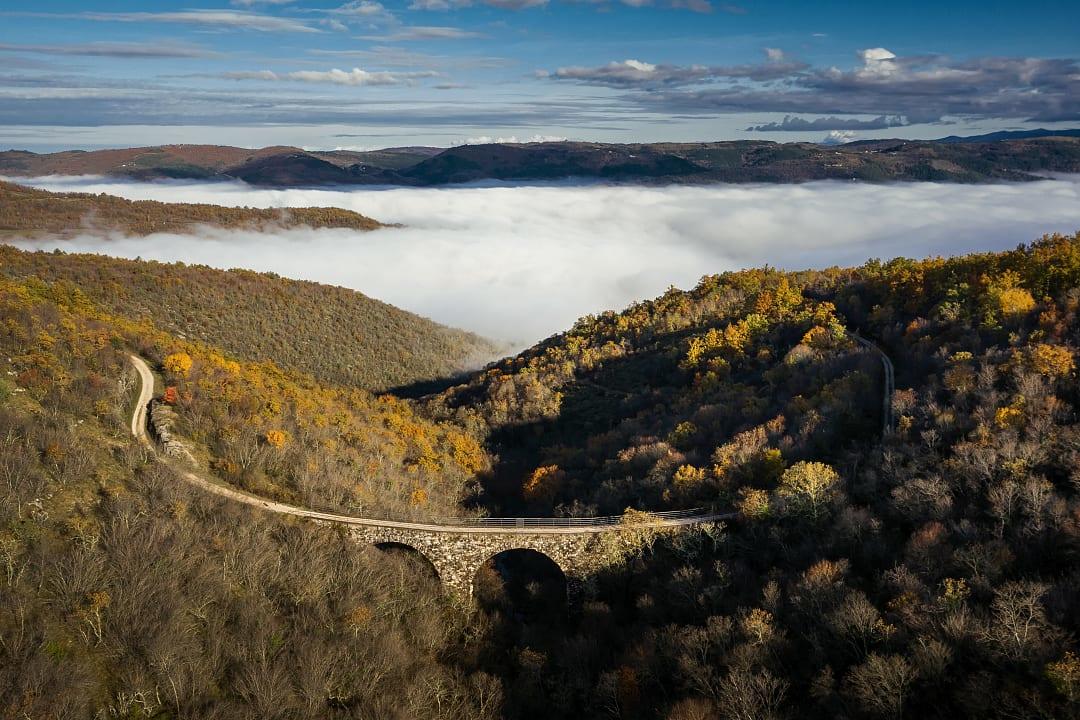
The Parenzana Trail bridge, Croatia.

The Parenzana Trail: Cycling Through Empire

The first tunnel is around 490 feet long and completely dark. You switch on your bike light and ride into it, the temperature dropping immediately, cold water dripping from the limestone ceiling onto your shoulders, the walls close enough to touch on both sides without fully extending your arms. The only sound is your breathing and the crunch of gravel under your wheels. Then the light at the far end grows and you emerge blinking into a valley view: vineyard terraces dropping away below you, a hilltop town on the opposite ridge, Adriatic light on everything.

You are cycling on a railway line built in 1902 by the Austro-Hungarian Empire to connect Trieste to Poreč. The Parenzana ran 76 miles through territory that has since been Italian and Yugoslav, and is now divided between Italy, Slovenia, and Croatia. Historically, to travel its full length required six different passports. Today, it is a continuous cycling trail. That transformation is itself a history lesson. When you stop at a former station house that is now a wine bar serving Malvazija and understand that this building was an Austro-Hungarian ticket office in 1910, an Italian rail station in 1930, a derelict ruin in 1960, and is now pouring natural wine to cyclists from three countries, you have understood something about 20th-century European history that no lecture could deliver with comparable clarity. The trail embodies this history.

When it comes to the physical reality, the trail deserves an honest description as it is not a paved promenade. The Parenzana involves loose gravel and mud after rain, significant elevation changes climbing into and out of hilltop towns, and tunnels that are genuinely dark, cold, and long enough that your headlamp shows nothing but rough stone wall until the far end appears. Arrive with appropriate lights, suitable footwear, and realistic expectations, and this becomes an adventure. E-bikes are available in Grožnjan, Buje, and Poreč, transforming the experience from an athletic undertaking into a deeply comfortable cultural journey. They allow you to focus on vineyard views, winery stops, and the conversations that happen when you arrive at a former station house and ask about its history.

The full trail rewards three to four days, staying in villages along the route. If it is beyond your timeframe, the section from Buje to Grožnjan, which is around nine miles, with the best tunnel and viaduct sequences, and from Grožnjan to Motovun, about 11 miles through oak forest and vine terraces, deliver the highest concentration of what makes the Parenzana worth riding. Local outfitters provide bike hire and vehicle transfers that move your bags between villages, making point-to-point sections straightforward. The ideal seasons are April through May for wildflowers and mild weather, and September through October for harvest scenery and spontaneous winery stops.

For inspiration on a trip focusing on both countries, see our Jewels of the Adriatic: Croatia and Italy Tour. Then, contact our travel specialists and request they arrange for the Parenzana be included in your itinerary.

What to Prioritize and What to Skip

Along the old Parenzana railway corridor, not every former station or border village justifies a stop. The value lies in the way a handful of key points reveal how this region shifted from Austro‑Hungarian to Italian to Yugoslav and, now, to a quiet meeting point between Croatia, Slovenia, and Italy. Prioritize stretches of the cycling and walking trail where you can see those layers in the architecture and in how spaces have been repurposed: a station turned wine bar, a warehouse turned gallery, a bridge that once marked a border now crossed without a second thought. Skip trying to tick every mile of the route; select segments where geography and history speak most clearly.

Who Should Base Themselves Here

This borderland is ideal for travelers who are as interested in political and cultural history as they are in scenery, and for those who enjoy moving slowly by cycling, walking, or taking meandering drives, with time to read the landscape. If shifting borders, layered identities, and the quiet strangeness of places that have belonged to several countries appeal to you, using a town along the Parenzana corridor as a base will be richly rewarding. Guests who mainly want resort comforts or a classic “coastal village” feel may find this region too subtle as a primary base and will enjoy it more as a day or overnight extension from the coast or interior.

How to Avoid Common Errors

The most frequent error in the borderland is treating it as a mere transit zone between more obviously picturesque areas, or, conversely, trying to cover the entire length of the Parenzana in a single, rushed day. Avoid overpacking the schedule; choose one or two segments to explore deeply, with time to stop at former stations, wineries, and viewpoints rather than racing from marker to marker. Do not assume wayfinding or services are uniform along the route. Work with your specialist to identify stretches with the right mix of scenery, safety, and places to pause. Resist the urge to compare every stop to Rovinj or Motovun; the borderland’s power lies in its layered quiet, not in showpiece facades. Ask your travel specialist to design a day that combines trail time with a meal in a town that embodies this history, so the political story and the physical landscape reinforce each other.

How Much Time Each Region Deserves

Houses in the village of Rovinj, Croatia.

For most travelers, the coast deserves the largest share of time, with three to five nights split between Rovinj, Pula, or nearby bases to let the harbor, Venetian facades, and working ports reveal themselves at different hours of the day. Inland, plan at least two nights in a single hill town if you care about wine, truffles, and agrarian life; one full day is enough to look, but not enough to feel the valley fog, forest, and konoba settle into your psyche. The borderland along the Parenzana corridor rewards one to two days if you are drawn to political history, cycling, and the strange intimacy of places that have belonged to several countries and now sit quietly between them.

If you are happiest with café life, harbor walks, and restaurant variety, treat the coast as your anchor and dip inland and into the borderland as extensions. If you gravitate toward vineyards, small producers, and walking from village to village, trade a night or two at the sea for time in the interior. If border stories and repurposed infrastructures fascinate you, let your specialist carve out a night along the Parenzana. Trying to “do all three Istrias in a day” turns them into backdrops glimpsed through a car window. However, giving each its own morning and evening lets the contrasts that make this peninsula unique actually register.

The Truffle Economy: What You Are Really Paying For

Motovun, Mirna Valley, Croatia.

Hold a mature white truffle and it is heavier than you expect, dense as compressed earth, cool from the soil. The smell is ancient and animal: a compound your brain files instantly under extraordinary, a category it shares with almost nothing else.

White truffles (Tuber magnatum pico) grow only in specific, undisturbed soils in symbiosis with oak and hazelnut roots. They cannot be reliably farmed. They exist entirely on their own terms, in a relationship with their host trees that took decades to establish and that a single season of drought can permanently disrupt.

Yields across Europe have dropped roughly 40% since 1990 as warming summers and altered rainfall patterns narrow the conditions these fungi require. But the number understates the deeper loss: the oral knowledge that surrounds the hunt, which valley corners hold moisture longest, which oak groves produce year after year, which soil textures signal the right depth, exists entirely in the minds of aging hunters and is not written anywhere. When you pay for a truffle hunt, you are not purchasing entertainment. You are subsidizing the economic reason for a hunter's children to stay and learn rather than leaving for the city. Your fee gives them financial reason to remain in a village of 200 people. In 20 years, this may not exist.

Reading a real hunt from a performance

A genuine truffle hunt accommodates two to four people maximum, begins at dawn (5.30am to 6am), and is priced to reflect the true cost of the experience, the two to three years of dog training, the forest access permissions, the time a hunter could spend selling commercially, and the intergenerational transfer of location knowledge that exists nowhere except in the person standing next to you in the fog.

Red flags

  • Hunts offered in July or August, when no white truffles are growing.
  • Guaranteed finds for large groups (pre-placed truffles by unscrupulous agents).
  • Prices so low they cannot account for the real costs involved.

If a hunter guarantees a find in 20 minutes for 10 people, you are watching a performance staged for the coach tour. Real truffle hunting involves patience, early rising, and the honest possibility of finding nothing.

The truffle calendar

  • White truffles peak October through December, with the apex window between November 10 and 25.
  • Black truffles are available December through March, less rarefied, but genuinely Istrian and still exceptional by any standard outside this region.

If you are in a restaurant, a real truffle's scent is fleeting and earthy, not overwhelming. If the truffle oil on the table smells like chemicals, you have most likely found a diluted perfume, rather than a luxury flavor.

Buzet and Oprtalj: Function and View

On Sunday mornings in autumn, pull into the Buzet market before 9am and you will find a transaction in progress that has no interest in being observed. Hunters arrive with paper bags, traders examine the contents without touching them, prices are discussed in voices low enough that you cannot hear them standing four feet away, and cash changes hands without ceremony or receipt. This is Istria's truffle economy on its own terms: professional, unglamorous, and completely honest about what it is. The annual Subotina Festival on the second weekend in September, centered on a communal truffle omelette, marks the season's official opening with considerably more theater.

From Oprtalj's stone loggia a few miles away, you can see Motovun across the Mirna valley: a walled town on a distant hilltop, floating above the oak forest. Having the geographical context at this scale clarifies something that standing inside Motovun never quite delivers: how these towns were positioned to watch each other, how the valley between them was the contested space, and how the whole interior operates as a system of sight lines and defense. Come here for a long lunch with that view, then return to Motovun for the evening. The two towns in combination are greater than either alone.

Hum markets itself as the world's smallest town. It has around 30 residents, takes five minutes to walk end to end, and hosts few restaurants. Arrive expecting a 30-minute wander and a good lunch, and you will leave satisfied. Dedicate a full day and you will wonder what you missed, because there was nothing to miss. Hum delivered exactly what it is, no more and no less.

Take a Gourmet Tour of Croatia. Our travel specialists will ensure every one of your requests is covered.

Wine Country: Reading Geology Through a Glass

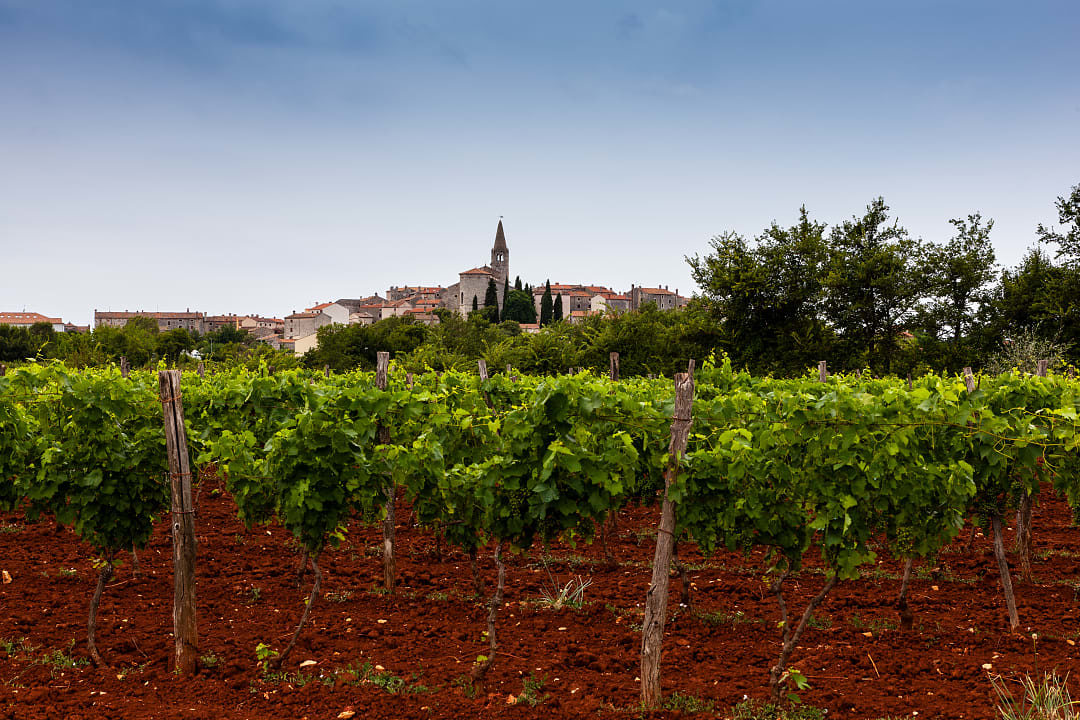
A wine farm in Istria which makes use of Terra Rossa.

Pour a Malvazija Istriana from Terra Rossa, the iron-rich red clay found primarily near the coast, alongside one from Terra Bianca, the pale limestone-heavy soil of the interior hills. These are dramatically different wines from vines planted five miles apart, with the difference entirely geological.

  • Terra Rossa retains heat, drains slowly, and stresses the vine in ways that concentrate sugars and structure. The result is a Malvazija that is full-bodied, round, and generous, with stone fruit and beeswax, a wine that feels like the coast it came from.
  • Terra Bianca is almost the opposite: lean, mineral, and electric, with an acidity that cuts clean and a finish that tastes of white rock. The same grape, the same winemaking tradition, the same peninsula, and two wines with almost nothing in common except their origin story.

Malvazija Istriana is to Istria what Albariño is to Galicia: the grape that could only come from here. The reason Istrian wine vanished from global markets for 50 years was Yugoslavia's forced collectivization, which dismantled independent winemaking entirely. Independent producers only re-emerged in 1991. When you taste a Malvazija from a small family winery today, you are drinking the first 30 years of a renaissance still very much in progress.

Teran, Istria's indigenous red, takes the Terra Rossa logic further still. The soil's iron character moves directly into the wine, tannic, mineral, and high-acid, historically paired with Istrian pršut precisely because the acidity cuts through cured fat in a way that makes both better. Communist-era replanting policies nearly eliminated old Teran vines entirely; the ones that survived are among the most historically significant in the region and contemporary producers are reconsidering the grape's potential with extended maceration and careful cellaring.

At a large cooperative, you sit at a tasting table with a flight of six wines and learn what you need to know. At the small family producer outside Grožnjan, found through a recommendation from your Zicasso specialist and visited by appointment, the winemaker's mother brings cheese and bread without being asked while her son pulls samples directly from barrels in a cellar carved into hillside bedrock. The conversation runs two hours because nobody has anywhere more important to be. You leave understanding not just what Istrian wine tastes like, but why this family makes it this specific way on this specific land. The luxury is not in choosing the most prestigious label. It is in knowing which producer will teach you what you came to learn.

What Signals Depth Versus Performance

Some wineries are built as stages and some as workshops. The difference is clear within minutes. A performance-driven visit moves briskly through a scripted flight, polished talking points, and a shop stocked for quick decisions; bottles are presented, but the story never strays far from medals, scores, or architectural features.

Depth often looks quieter, with imperfect but working spaces, owners or family members pouring for you themselves, and a willingness to dwell on soils, failures, and experiments rather than only on finished labels. When questions about geology, history, or farming are answered with specifics rather than slogans, and when the conversation can follow your curiosity instead of being steered back to the price list, you are in the right place.

How to Ask Thoughtful Questions About Istrian Wine

Thoughtful questions signal you are there to listen, not just to consume, and most small producers will meet that thirst for knowledge more generosity than they would a formal “tour.” Instead of asking which bottle is “best,” ask which vineyard they would keep if they could only keep one or which vintage taught them the most about Malvazija or Teran, and why. Ask how Terra Rossa and Terra Bianca changed their decisions in the cellar or which wine they open when they want to explain Istria to a friend from abroad.

If you are comfortable going deeper, invite stories about their family’s experience of collectivization and what it meant to reclaim or plant their own vines after 1991. The goal is to give the winemaker room to connect the glass in your hand to the land under your feet and the decades that made both possible. It’s not an interrogation.

Enjoy the Food and Wine of Croatia in 10 Days.

Food Culture: The Konoba as Quiet Sovereignty

A Konoba restaurant in Brac island, Croatia.

The room is small, with perhaps eight tables, stone walls, and a fireplace that has clearly been burning since October. There is no written menu. The woman who seats you also cooked everything and will bring a carafe of wine without being asked. She recites what is available today to the couple beside you in Istrian dialect, shifts to Croatian for you, then to hesitant English when she senses Croatian is not landing. The fuži with truffle that arrives 20 minutes later uses a recipe that was never written in a cookbook because, for decades, it did not need to be. It moved from grandmother to mother to daughter in a kitchen where commercial hospitality was legally prohibited and the only reason to cook this way was stubbornness and self‑respect.

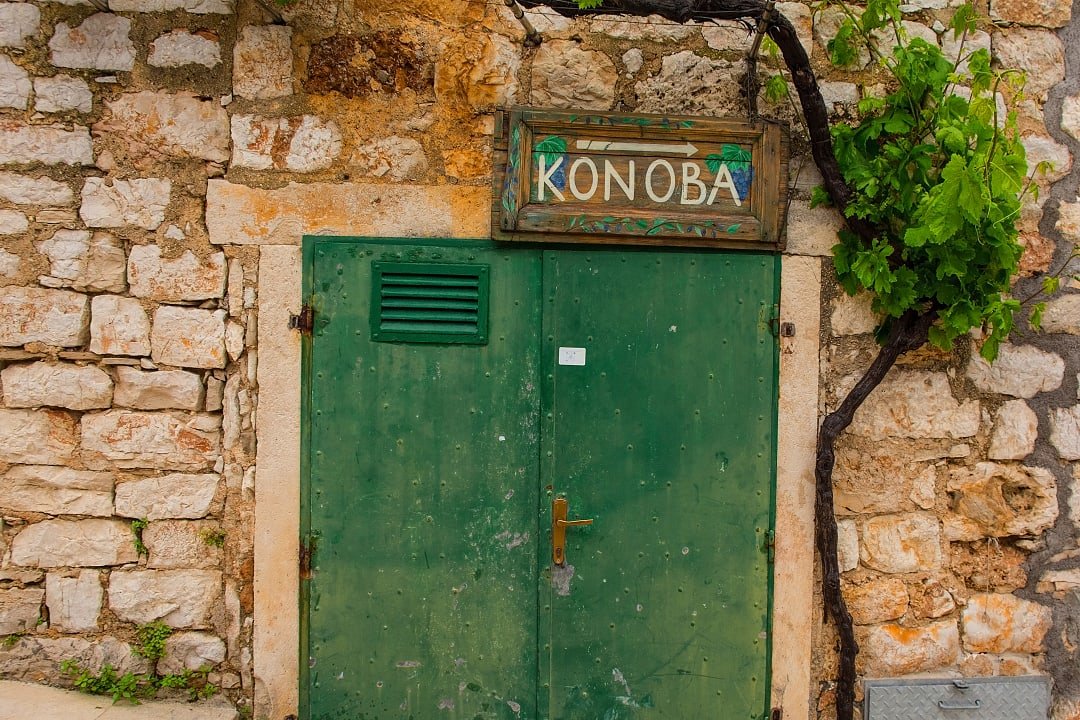
This is a konoba. It’s not “a rustic restaurant with checkered tablecloths,” as tourist marketing reliably describes it, but a family cellar or tavern where surplus wine and simple food were once served to neighbors, a semi‑private, semi‑public space that learned to survive political systems designed to erase it. Under Yugoslavia’s restrictions on private hospitality, many konobas retreated entirely into the domestic sphere, keeping recipes and techniques alive as family knowledge outside the reach of state canteens and industrial food. After Croatian independence, some of those same kitchens cautiously emerged into licensed taverns, but the operational logic did not change: small rooms, short menus, intergenerational labor, and an almost total indifference to branding. When you eat here, you are participating in a form of cultural sovereignty that outlasted collectivization by refusing to disappear.

How to Recognize the Real Thing

A genuine konoba has restricted hours, typically noon to 3pm and 7pm to 10pm, no glossy multilingual menu, and staff who default to Istrian dialect, Italian, or Croatian, with English as a fallback. In Rovinj’s most photographed lanes, the word konoba appears on dozens of façades, many of them conventional restaurants borrowing the term for atmosphere; the real thing tends to sit in interior villages, workaday neighborhoods, or side streets where the dining room looks like an extension of someone’s home.

The economics tell their own story: a place serving 20 people three nights a week cannot justify complex payment systems, which is why cash is often preferred. The infrastructure costs make no sense at that scale. Finally, the menu should be short enough that absence is normal: if the kitchen cannot tell you what they are out of today, they are not operating on the terms that kept konobas alive through political shifts.

The Defining Ingredients

The Slow Food movement’s deep presence in Istria grew directly from post‑Yugoslav cultural reclamation, where reviving suppressed ingredients became a way of recovering identity. When a konoba menu lists “boškarin from Marijan’s farm in Sovinjak” or “olive oil from 200‑year‑old trees in Kaštel,” that is not a marketing flourish. The cook knows Marijan. The trees predate Croatian independence. Seasonality is enforced by absence, not preference

  • Boškarin beef: The native Istrian ox, nearly lost by the 1990s as industrial farming rendered it uneconomic. It is only slaughtered after its working life, which means years spent plowing fields and foraging native grasses before ever seeing a kitchen. The resulting stew is dark, mineral, and long‑braised, a flavor that carries the animal’s biography in the bowl. As a Slow Food Presidia product, its methods are actively protected as part of Istria’s food sovereignty, not just its cuisine.
  • Wild asparagus (šparuge): Pushed through oak forests in April and May, pencil‑thin and intensely bitter, scrambled with eggs as frtalja or draped over fresh fuži. The season lasts three to four weeks and cannot be meaningfully extended; asking for it in August is like asking for snow in July. The refusal to serve it out of season is a quiet assertion of how time works here.
  • Istrian prosciutto (pršut): A minimum of 12 months of aging, specific pig breeds from the plateau, and traditional sea‑salt curing without additives produce a drier, more intensely flavored result than mass‑market hams. Paired with a glass of Teran, whose acidity cuts the cured fat, it becomes a lesson in how local breeds, wind, and salt collaborate on a plate.
  • Fresh olive oil: In November, fresh‑pressed oil is neon green and aggressively peppery, the heat in your throat the polyphenols that make it potently anti‑inflammatory. By March, the same oil has mellowed to gold. Istria’s 50‑plus indigenous olive varietals are best understood at the mill during pressing season, where a single sip can show you the difference between last year’s memory and this year’s harvest.

For more information on the culinary scene, take a look at our Top 12 Food Experiences in Croatia.

Natural Attractions: What to Prioritize

Cape Kamenjak, Croatia.

Brijuni Islands National Park

The ferry from Fažana takes 15 minutes and deposits you in a world that is equal parts ancient history, Cold War surrealism, and unexpectedly moving political archaeology. Roman ruins and Byzantine remains share the island with a safari park whose animal collection descends from diplomatic gifts, the elephants and zebras that foreign heads of state sent Tito during the years when this archipelago was the stage set for Non-Aligned Movement politics. In the villas and museums, you encounter a specific aesthetic that no longer exists anywhere else: socialist luxury, the design language of a country that was communist, and, somehow, exceptionally well-dressed.

Let us be direct: Brijuni is a niche interest, not a luxury resort. For travelers with a genuine interest in Yugoslav history, Tito's political strategy, or the aesthetics of Cold War power, it is irreplaceable and genuinely strange in the best way. It is the place where Nehru, Nasser, and Haile Selassie came to lunch, where the furniture of non-alignment is still in the rooms. For travelers focused on truffles, wine, and medieval architecture, it is a costly half-day that consumes time better spent elsewhere. Know which traveler you are before you book the ferry.

The Best Swimming on the Peninsula: Kamenjak

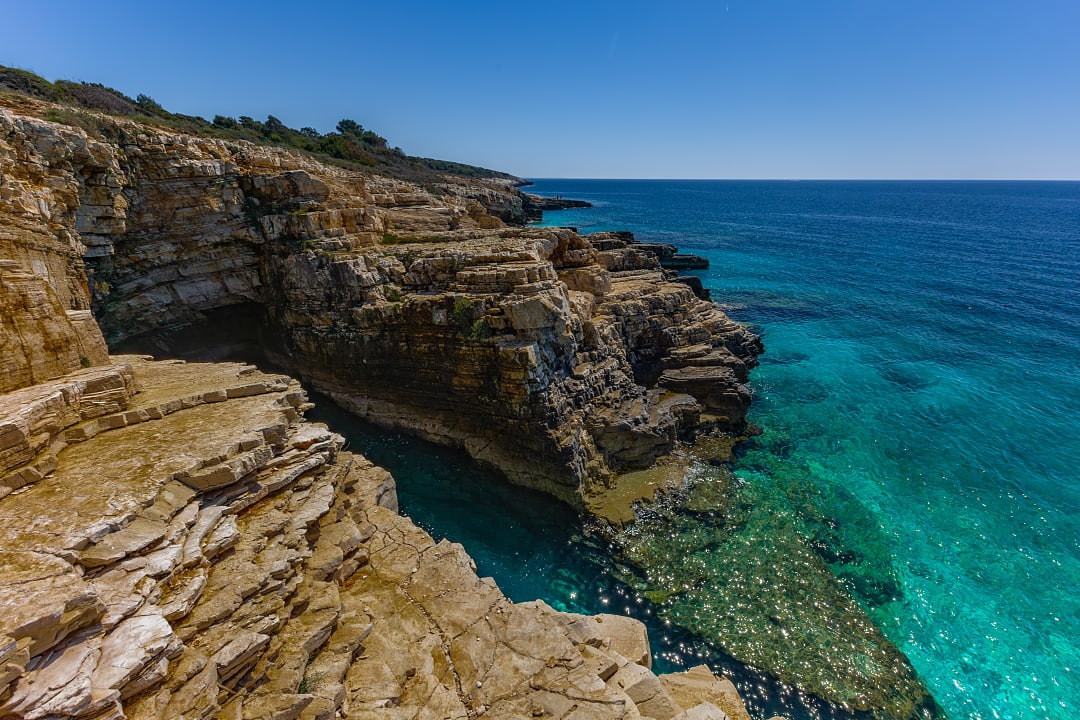
For the finest swimming Istria offers, the answer is Cape Kamenjak, a nature reserve at the southern tip of the Istrian peninsula near Pula. Dramatic limestone cliffs drop into hidden coves accessible only on foot or by kayak, with cliff-jumping platforms, wild swimming alongside beach-club culture, and water the color of expensive glass. You pick your way across sun-warmed limestone shelves, look down through water clear enough to count the sea urchins below, and step in. The cold is precise and complete. The pine trees above provide real shade. Once you have swum here, ordinary beach arrangements feel like a diminished version of something.

For families with young children or less confident swimmers, Medulin, which is south of Pula, offers the rare exception of genuinely sandy, shallow bays. The broader reality of Istrian beaches, stone shelves, pebble coves, and concrete platforms rather than organized sand, is the direct consequence of the same limestone geology that produces those extraordinary clear-water colors. The trade is entirely worth it.

For all you need to know about a trip to the country, see our How to Plan a Trip to Croatia: Frequently Asked Questions.

Practical Intelligence

The wine region of Istria, Croatia.

Language: Which Key Opens Which Door

By the time you reach Istria, you will already have seen how identity here is negotiated rather than fixed and how the peninsula has passed through multiple sovereignties without moving an inch. In that context, language is a choice about which layer of that history you are acknowledging. The practical rule is simple: Italian usually lands best with locals aged 70-plus on the coast; Croatian or English is safer with younger generations. The deeper principle is this: Croatian signals respect for present sovereignty, Italian signals respect for memory, and English keeps the interaction safely transactional. Choose consciously and the doors that open will tell you a great deal about where you are.

In Rovinj, when you order wine from a 70-year-old waiter in Italian and he lights up, you are speaking to a person who was a child in the town when it was still Rovigno. He may disappear behind the bar and return with a carafe that was never on the menu, then sit down to talk, in Italian, about growing up here before 1947. In Motovun, asking a hotel owner in Croatian for a konoba recommendation and having them call their cousin connects you to the Istrian present, not just its Venetian or Italian past. Those are two different keys opening two different doors in the same building.

Two things to avoid follow naturally from this. Calling Istria “really Italian” to a Croatian resident implies that current sovereignty is illegitimate; describing it as “all Croatian now” erases the lived experience of bilingual residents whose formative years belonged to another state. Acknowledging the duality openly because you now understand how it formed and why it persists costs nothing and earns considerable goodwill. A Zicasso specialist will prepare you for these navigations so the first conversation you have in a bar or konoba reflects historical and cultural intelligence..

Driving: Turning Geography Into Access

Driving allows you to move between the three regions on your own terms. Without a car, you have the coast. With a car, you have Istria. This is not an exaggeration. The isolated konoba, the dawn truffle hunt, and the family winery where the tasting happens in a cellar carved into bedrock all sit on roads you will only turn down if you are free to treat the map as a suggestion.

A private driver arranged through your Zicasso specialist adds another layer: local pattern recognition. This is the person who already understands the geography you have just read about. They know which family-run producers are worth a detour and which have quietly declined, who has driven the hill road after autumn rain and can tell you if it is passable today, who senses when to switch from Croatian to Italian at a doorway so the welcome is warmer. In a region where the most valuable experiences are word-of-mouth and relationship-dependent, a driver who grew up here is the practical expression of every abstract insight you have acquired about Istria’s terrain and culture.

Payment: Economics Behind the Atmosphere

Understanding how konobas function economically makes it much easier to behave in ways that protect the atmosphere you came for. Nothing destroys the carefully built atmosphere of a three-hour konoba dinner more efficiently than discovering, after the last grappa, that they do not take cards and the nearest ATM is 10 miles away. Family-run konobas, truffle farms, small cellar-door wineries, and market vendors frequently prefer or require cash, not to avoid tax, but because of the cost of payment infrastructure. The turnover and margins of these businesses are nothing like those of resort restaurants. Carry enough cash, ideally in smaller denominations, to cover at least a dinner and a market morning, and do so without making the transaction a drama. If you have absorbed how fragile and deliberate these spaces are, arriving prepared becomes part of the respect you show them.

In Istria, luxury is not only about staying in beautiful places. It’s about moving, speaking, and paying in ways that respect how the peninsula works. Do this and the doors that open and the rooms you’re invited into are the ones no photograph could promise.

Accommodation Strategy: The Mistake Most Travelers Make

Landscape of Motovun, Croatia.

Where you sleep determines the version of Istria you wake up in.

A coastal hotel puts you at the edge of the Adriatic at dawn, when the fishing boats are already out, the harbor light is low, and you can smell the sea through the window before you have opened your eyes. An interior agriturismo puts you at the edge of a vineyard, the morning fog still in the valley below, the sound of a tractor starting somewhere on the property before 7am because harvest does not wait for guests. Neither is superior. They are different experiences of the same peninsula and the week that includes both is the week that delivers what Istria actually is.

The mistake most travelers make is choosing one base and treating the peninsula as day-trip territory from it. Book three nights in Rovinj and three nights in Motovun. Rovinj gives you the sea, the Venetian architecture, the harbor light at dawn, and the coast's aperitivo and evening promenades. Motovun gives you the fog, the forest silence, the truffle economy in operation, and the interior's entirely different relationship with time and appetite. These are not variations on a theme. They are two different countries that happen to share a peninsula and a border history.

Coastal stays in July and August require booking several months in advance. Interior stays during peak truffle season (October to November) fill equally far out. The golden window of late September to early November offers a superior experience and, on average, rates that are meaningfully lower than summer peak. This makes the best time to visit the most cost-efficient.

Sample Itineraries

Sunrise in Rovinj, photo supplied by Hotel Monte Mulini.

Five Days: The Istria Introduction

Five days is enough to establish the coordinates and understand what you will need to return for. This is the minimum window in which you can feel the difference between the coast and the interior rather than just see it on a map.

Days one and two: Base on the coast in Rovinj or Pula. Let the shoreline do its work: the Arena at opening time in the silent early morning; a swim at Zlatni Rt or Kamenjak when the light is still low; a first konoba meal where the menu is recited verbally and the wine arrives in an unlabeled carafe. You are learning how time, language, and appetite work here.

Day three: Drive north from the coast via Limski Fjord for oysters at the fjord mouth, opened to order while you look at the farm they came from, then continue inland to your first hilltop base. This is the day you feel the shift from maritime to agrarian appeal in the space of an hour.

Days four and five: In truffle season from late September to November, a dawn hunt; outside that window, a morning Parenzana section and an afternoon wine circuit that shows you how Terra Rossa and Terra Bianca translate into the glass. End a day on Motovun’s ramparts as the valley fog begins to form and you will have met at least two of the three Istrias properly.

Seven Days: The Food and Wine Deep Dive

Seven days allows seasonal alignment and, crucially, enough time to eat at the same konoba twice. The second visit is when the relationship shifts; the wine that was not on the menu last time appears and the conversation moves from transactional to the kind people have when they expect to see each other again.

Days one and two: Coast base in Rovinj, coastal orientation, a first konoba meal on a local recommendation, and time to understand how tourism season and local life intersect on the waterfront at different hours of the day.

Days three through five: Move inland at harvest time. If it is October to November, this is when you hunt truffles at dawn and see white truffles leave the ground and arrive on your plate in the next 12 hours. If it is September, vendemmia turns winery visits into working scenes rather than staged tastings. In December, an olive oil mill visit during pressing season shows you what “fresh” means in a single neon‑green sip. The Parenzana cycling segments thread these experiences together at a pace that matches the landscape.

Days six and seven: A flexibility buffer that privileges depth over volume. This is when you repeat the konoba that justified the detour or return to a winemaker who opened something unlisted on day four. Finish by looping back to the coast via the Euphrasian Basilica, a final swim if the season allows, and the particular quality of late‑afternoon light on Poreč’s harbor before departure. The goal is not to add more towns, but to revisit the places that spoke loudest.

Ten Days: The Comprehensive Istria

Ten days is enough to stop being a visitor. By day six or seven, you know which bakery opens first, which konoba locks its door at 2.30pm, and which promontory the locals use at dusk. These are not secrets requiring insider connections. They are simply things that require staying long enough to notice.

Opt for a three‑base structure of coast (three nights), interior (four nights), and Parenzana corridor (three nights). This gives each Istria its own mornings and evenings, instead of turning them into a single, overfull day. On the coast, watch how the harbor changes between the first fishing boats and the last aperitivo. Inland, learn which fog mornings are worth setting an alarm for and which days belong to long lunches. Along the borderland, ride or walk Parenzana stretches slowly enough to hear how the story changes from village to village.

The real gift of 10 days is the “wasted” afternoon, when you sit in a Motovun café doing nothing in particular while the valley fog forms below and a winemaker you met on day three walks in and sits down. The afternoon becomes something entirely different from what you planned. That pivot from a scheduled hour to an unplanned conversation that could not have happened on day two is the clearest possible expression of what this entire guide has been preparing you for.

What to Skip: The Honest Curation

White truffle, Istria, Croatia.

In luxury travel, attention is the scarcest resource. Not everything marketed as essential deserves it.

  • Tourist konobas: Any establishment calling itself konoba in Rovinj's most photographed lanes is almost certainly a conventional restaurant using the term as branding, decent food, excellent views, prices calibrated to day visitors. For the real version, go to interior villages or ask locals in the Borik neighborhood.
  • Underground tunnels: Pula's Zerostrasse tunnels are historically interesting for about 15 minutes and do not warrant prioritizing over the Arena, the Temple of Augustus, or a long lunch.
  • Hum as destination: A lovely 30-minute wander with a good lunch. Dedicate a full day and you will spend the second half wondering what you missed because nothing was missed.
  • Souvenir tastings: Generic olive oil tastings in tourist shops add nothing compared to visiting a working mill during pressing season, where you see production and taste with the people who made it.
  • Off-season truffle menus: Any white truffle dish offered between February and September is drawing on preserved or frozen product. Worth knowing before ordering at fresh-truffle prices.

Why Visit Now

Aerial view of Rovinj, Croatia.

Istria is not undiscovered and never was, but it is still in the process of becoming something, still negotiating between the grandmother's recipe and the young chef's interpretation of it, between the 80-year-old truffle hunter and his 30-year-old grandson, who is trying something different with the same forest. This balance is fragile and specific to this exact moment.

  • Overtourism approaching: Summer crowd levels in Rovinj edge closer each year to the saturation that has already rendered Dubrovnik largely inaccessible as a genuine experience. The window where coastal Istria remains manageable rather than overwhelming is narrowing.
  • Truffle yields declining: What scientists monitoring oak forest moisture levels and soil temperature changes describe is not a gradual decline, but an accelerating one. The next 10 to 20 years may represent the last generation in which white truffle hunting functions as a working profession rather than a museum demonstration.
  • Konoba succession crisis: The owners of the most genuinely traditional family operations are in their seventies and the next generation is largely not inheriting the business. When they stop cooking, the recipes go with them because they were never written down. They never needed to be.
  • Generational balance: Old-guard tradition-keepers and new-generation innovators exist simultaneously now, in the same valley, sometimes in the same family. This balance will not last. Visiting now is not marketing urgency. It is accurate timing.

Plan Your Trip to Istria

Pula city, Istria, Croatia.

Visit Istria because it is still negotiating what it wants to become. You have the opportunity to witness and participate in that negotiation, to support the version of it you hope survives, to form relationships that go beyond single-visit consumption. That is the deepest thing Istria offers: not a transaction, but a stake in its ongoing story.

Zicasso's destination specialists have worked directly with the truffle hunters, winemakers, konoba families, and coastal hoteliers described throughout this guide. They know the difference between a genuine experience and a performance staged for visitors, and they build itineraries accordingly. The right time to go is the golden window. The right way to go is with Zicasso, which already has the door open. For more information, see our Croatia travel guide, with further inspiration to be found in our sample Croatia tours and vacations.

30,000+ Verified Traveler Reviews