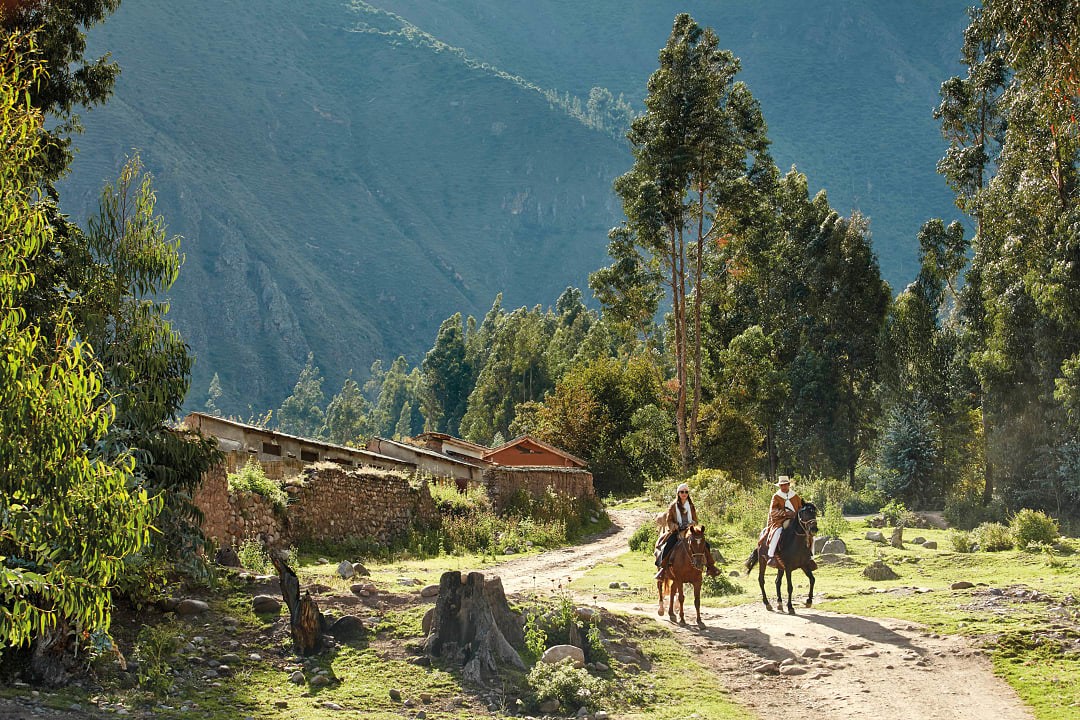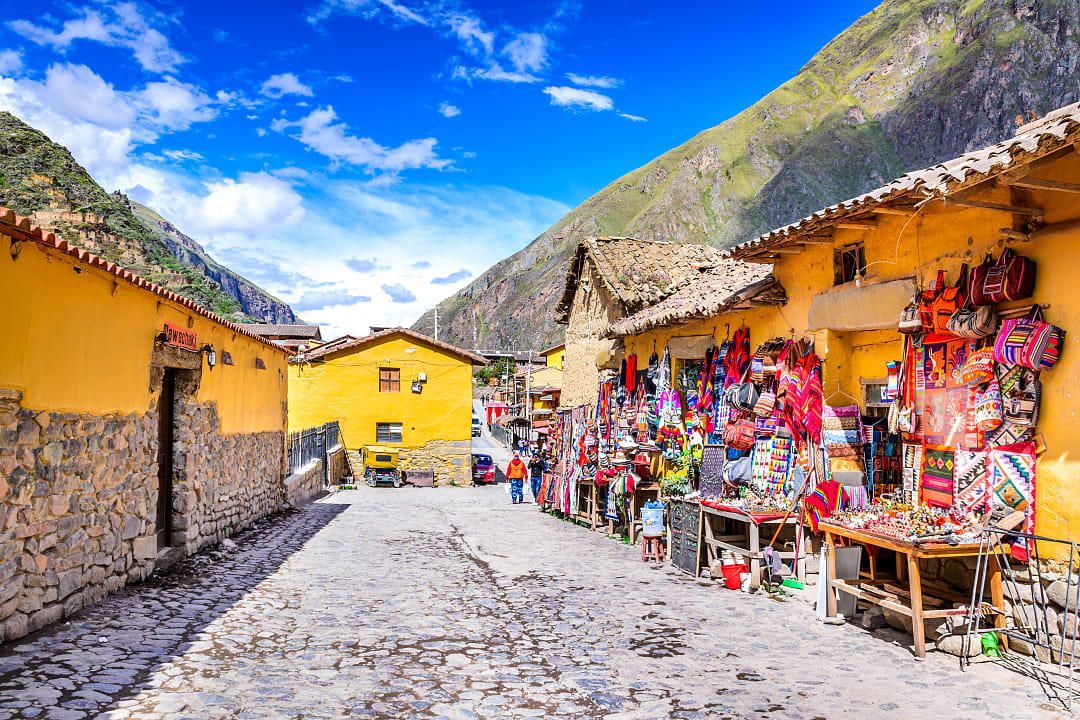
The Sacred Valley is the most romantic place to begin a Peru trip. It sits roughly 1,700 feet lower than Cusco, so couples acclimatize in a garden lodge instead of a city hotel room. Inca terraces climb the slopes above the Urubamba River, villages keep their market days and weaving traditions, and the snowcapped peaks of the Urubamba range close off the view.
Starting here shapes the rest of the trip. Ollantaytambo is the main rail station for Machu Picchu, so two or three nights in the valley lead straight to the citadel without doubling back. Cusco then becomes your last Andean stop, by which point your lungs have caught up with the altitude. Couples who reverse the order often spend their most expensive nights tired.
Time with Local People in the Sacred Valley
- Pachamanca lunch: A farming family heats stones in an earth oven, layers lamb, potatoes, and fava beans between them with huacatay and other Andean herbs, and seals it all under soil, so lifting the cover together becomes part of the pachamanca meal.
- Chinchero weavers: On a private afternoon at a weaving cooperative, women dye alpaca wool with plants and cochineal, the tiny insect behind the deep reds of Andean textiles, then work the patterns on backstrap looms.
- Despacho ceremony: An Andean priest, or paqo, folds coca leaves, seeds, and sweets into a paper bundle as an offering to Pachamama, Mother Earth, and some couples hold a despacho to mark a new marriage.
- Misminay community: On the plateau near Moray, families in this farming community welcome visitors into their fields and kitchens and play their music for them.
What to Discover in the Sacred Valley
- Pisac terraces: Curved terraces climb from the town’s market to a hilltop citadel, and an early start with a private guide usually puts you there ahead of the day buses.
- Ollantaytambo fortress: Inca street plans still shape the town below the fortress, where the terraces catch the low sun in late afternoon.
- Moray terraces: Circular terraces descend into a natural bowl, and archaeologists widely believe the Incas used the temperature differences between levels to test crops.
- Maras salt pans: Thousands of pools step down the hillside, each plot still worked by the local family that inherited it.
- Huchuy Qosqo: This lesser-visited Inca site sits on a ridge above the valley, reached on a half-day hike that often leaves couples with the ruins to themselves.
How long to stay: Two to three nights.
Begin your trip in the valley with guidance from our Romantic 10-Day Peru Tour for Couples.